
Planning Guides · 3 August 2026
Wedding Day Timeline for a Costa del Sol Wedding
Almost every timeline problem we see at Costa del Sol weddings comes from planning the day on paper before thinking about where the sun will actually be. Here is how we build a schedule that works with the light and the heat rather than against them.
Almost every timeline problem we see at a Costa del Sol wedding comes from the same place. The day gets planned on paper, in order, from morning to night, and only afterwards does anyone ask where the sun will be. By then the ceremony is booked for two in the afternoon in July, the portraits are scheduled for the hottest and harshest hour of the day, and the light everyone came to Spain for arrives while the guests are sitting down to dinner.
It is an easy thing to get wrong, because in northern Europe the logic works. In southern Spain it does not. The sun is higher, the contrast is harder, the heat is a real constraint on comfort, and the good light arrives later and moves faster than most couples expect.
This is how we think about building a schedule for a wedding in Málaga and across the Costa del Sol, based on the days we actually work rather than a generic template. It is not a rule book. It is a way of making the decisions in the right order.
Build the Day Backwards From Sunset
This is the one principle that changes everything else.
Look up the sunset time for your date at your venue. Not roughly, precisely. In Málaga province, sunset moves from around 18:15 in December to around 21:45 in late June. That is a swing of three and a half hours, and it means a timeline that works beautifully in May will not survive being copied into October.
Once you have that number, work backwards. The last hour before sunset is when the light does the thing you came here for: low, warm, directional, forgiving. Place your couple portraits inside that window and then build the rest of the day around them. Everything else has more flexibility than the sun does.
For a late June wedding with a 21:40 sunset, that puts portraits at roughly 20:30. Working back from there, the ceremony sits comfortably at 18:30 or 19:00, guests arrive from 18:00, and you have a genuinely pleasant evening rather than an afternoon spent looking for shade.
For an early October wedding with a 19:45 sunset, the same logic gives you a 16:30 or 17:00 ceremony. The day is shorter and the margins are tighter, which is exactly why doing this calculation first matters more in autumn than in summer.
The Heat Is a Scheduling Problem, Not a Weather Problem
Between late June and early September, the hours from roughly 14:00 to 18:00 are the part of the day when an outdoor ceremony asks the most of your guests. Temperatures inland at a finca can sit well above the coastal figure, and guests in formal clothes, in direct sun, on unshaded seating, will be uncomfortable in a way that shows in the photographs.
You do not solve this with a marquee or a fan. You solve it by not scheduling the ceremony there in the first place.
A summer ceremony that begins after 18:00 changes the entire feel of the day. The light softens, the ground has stopped radiating heat, guests relax, and the celebration flows naturally into the evening rather than needing to recover from the afternoon. Spanish weddings run late by cultural default, and there is a reason for it.
If your venue or your legal ceremony time makes an afternoon start unavoidable, the practical mitigations are shade over the guest seating, water available before people sit down, and a genuinely short ceremony. Twenty minutes in the sun is fine. Fifty is not.
Getting Ready: Allow More Time Than You Think
The morning is where timelines most often start to slip, and the slippage compounds through the rest of the day.
Hair and makeup routinely run over, usually because the schedule was built on the artist's best-case estimate rather than a realistic one. If you have a bridal party, the honest planning number is longer than whatever you were quoted. Ask your artist for a finishing time and then treat the half hour before it as the real target.
For coverage, the getting-ready period is where a lot of the quiet, human material of the day comes from: the details laid out, the dress hanging in the light, the small moments between people who are nervous and happy at the same time. Rooms with a large window and some space to move are worth requesting. Rooms with the curtains closed and every surface covered in bags are a fight against the environment rather than a use of it.
A practical detail that costs nothing: keep the dress, shoes, rings, invitation and any heirloom pieces together in one place rather than scattered across the room. Ten minutes of tidying before we arrive buys back twenty minutes of shooting.
The Ceremony
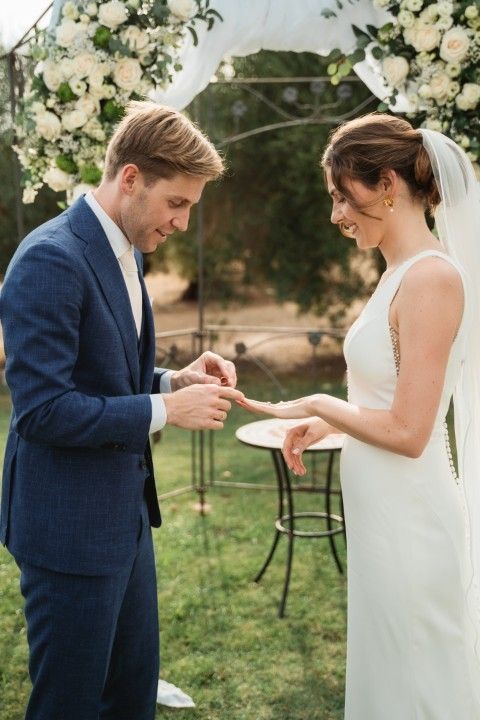
Ceremonies in Spain vary enormously in length. A symbolic ceremony is usually 20 to 30 minutes. A civil ceremony can be shorter. A religious ceremony will be longer and follows its own structure.
Two things are worth deciding in advance.
Which direction the couple faces. If the ceremony is outdoors and the sun is still relatively high, having the couple face away from the direct sun avoids squinting and hard shadows across the face. This is a five-minute conversation with your planner or celebrant that materially improves every ceremony photograph you will ever look at.
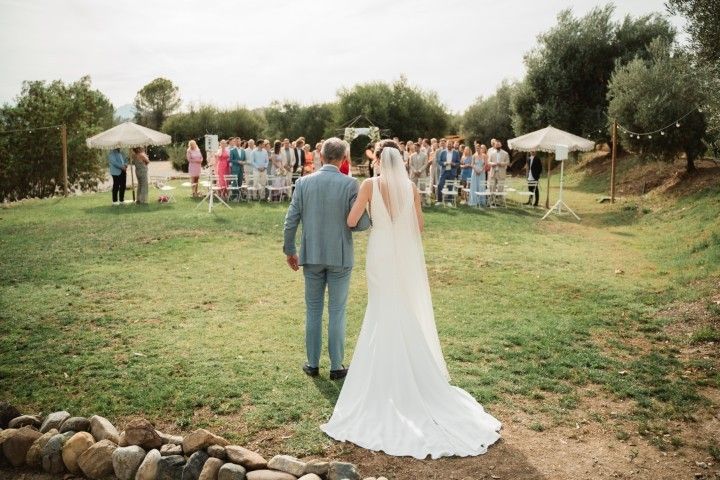
Whether guests will hold phones up. We do not have a strong view on unplugged ceremonies, and we will work with whatever you decide. But the aisle shot is one of the few genuinely unrepeatable frames of the day, and a row of raised phones sits directly in it. A single line from your celebrant before the processional resolves it without ceremony.
The Transition After the Ceremony
The half hour after the ceremony is the most consistently underestimated part of a wedding timeline.
What is supposed to happen: congratulations, a drink, group photographs, and everyone moves to the reception space. What actually happens: seventy people all want to speak to you, the group photographs take twice as long as planned because two people are missing, and the schedule quietly loses twenty-five minutes it never budgeted for.
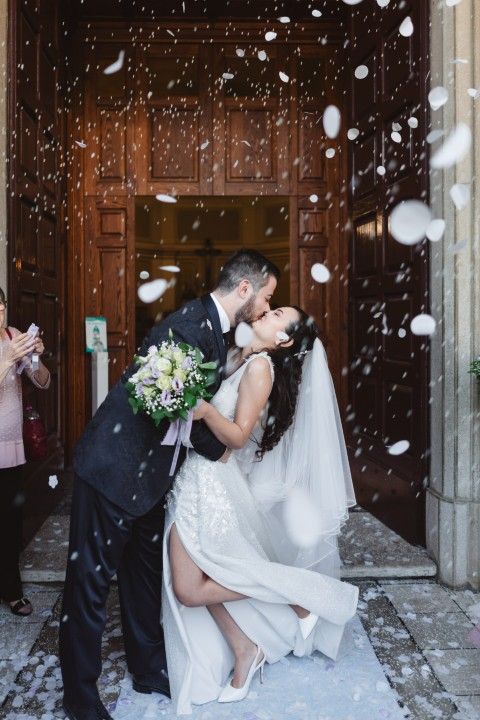
Two things help. First, keep the formal group list short and specific. Eight to ten groups is a workable number, and someone from each family who knows the faces should be nominated to gather people. A list of twenty groups will consume your entire cocktail hour. Second, plan for the confetti or exit moment immediately rather than trying to reassemble everyone later. It only works while the crowd is still together.
Portraits: Short, Late, and Twice
We rarely take couples away for a long block of portraits, and we think the traditional hour-long session does more harm than good. You came to spend the day with people who travelled to be there.
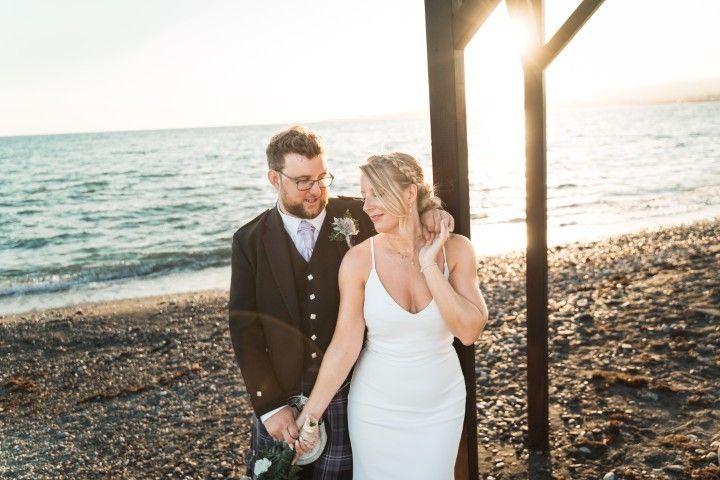
What works better is splitting it. A short session of ten or fifteen minutes shortly after the ceremony, while the adrenaline is still high and you both look exactly as you did walking back down the aisle. Then a second, longer session of twenty to thirty minutes in the final hour before sunset, when the light is at its best and the day has settled.
The second session is the one that produces the images most couples end up printing. It is also the one that gets cut first when the timeline is tight, which is precisely why it should be protected in the schedule from the beginning rather than treated as optional.
If your venue has a viewpoint, a stretch of coast, an old town nearby or a piece of landscape worth walking to, this is when you use it. Ten minutes of travel inside the golden hour window is usually worth it. Thirty is not.
Speeches, Dinner and the Evening
In Spain, dinner tends to start later and run longer than couples from the UK, Ireland or Scandinavia expect. A reception that begins at 21:00 and runs past midnight is completely normal here, and guests adapt to it quickly.
For coverage, the useful question is where the speeches sit. Speeches before dinner keep the speakers sober and the room attentive, and they leave the meal itself relaxed. Speeches between courses are the more traditional Spanish pattern and work perfectly well, but they extend the meal considerably, which matters if your coverage has an end time.
The first dance is worth placing while there is still a crowd. If it drifts too late, half the guests have moved outside and the room reads as emptier than the night actually felt.
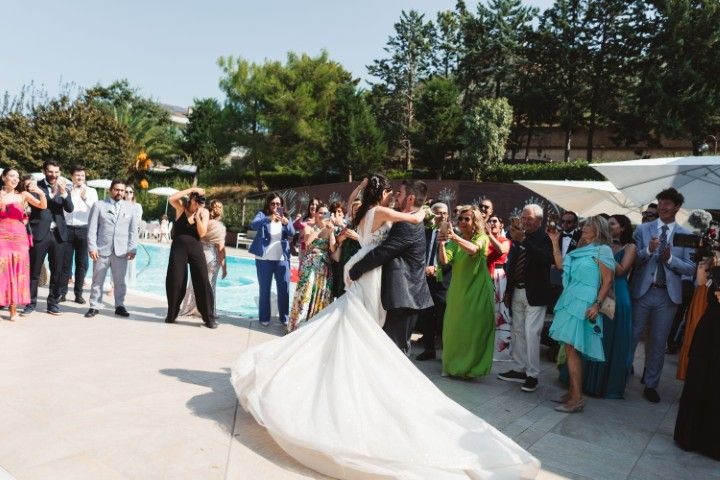
A Worked Example
Here is a timeline for a symbolic ceremony at an inland finca in mid-September, when sunset falls at roughly 20:20. Treat it as a shape rather than a prescription.
- 14:00 Coverage begins, getting ready
- 16:15 Dress on, final details, quiet portraits in the room
- 17:00 Guests arrive, drinks served
- 17:30 Ceremony
- 18:00 Confetti exit, congratulations, drinks
- 18:20 Group photographs
- 18:50 Short couple session, fifteen minutes
- 19:15 Speeches
- 20:00 Couple portraits in the last light
- 20:30 Dinner
- 22:30 First dance
- 00:00 Coverage ends
Move the ceremony to 19:00 and everything shifts an hour and a half later for a July wedding. Move it to 16:00 and the same shape works for late October. The structure holds; the clock changes.
What We Do With This
We build a timeline with every couple we work with, and it is a conversation rather than a form. You know your families and your venue. We know how the light behaves at that venue in that month and where the day is likely to lose time.
Most of the value is in the details that only come from having done it before: that the drive between two specific points takes longer than the map suggests on a Saturday in August, that a particular terrace loses the sun forty minutes earlier than the surrounding garden, that a certain venue's dining room needs the speeches moved earlier because of when the room falls into shade.
If you are at the stage of choosing a venue rather than scheduling a day, our guides to wedding venues in Málaga, Marbella and Ronda cover how each place handles light and guest flow. If you are weighing up dates, the best time of year to get married on the Costa del Sol goes through the months in detail.
For what coverage across a full day like this actually involves, see our wedding photography and wedding film pages, or our pricing for how packages are structured. If you have a date in mind, you can check availability or simply get in touch. We are always happy to talk timelines early, well before anything is booked.
Planning a wedding in Málaga?
We are based on the Costa del Sol and photograph and film weddings across Málaga, Marbella, Nerja, and wider Andalusia. Tell us your date and venue - we are happy to help before you have made any decisions.
Frequently Asked Questions
- What time should we start our wedding ceremony in Spain?
- It depends almost entirely on the month. For a summer wedding on the Costa del Sol, a ceremony between 18:00 and 19:00 keeps guests comfortable and puts the portraits close to the best light of the day. In spring and autumn the sun sets earlier, so a ceremony between 16:30 and 17:30 usually works better. The single most useful thing you can do is check the actual sunset time for your date and venue, then build the day backwards from there rather than forwards from the morning.
- How long should we allow for couple portraits?
- Between 30 and 45 minutes is enough for most couples, and it does not need to happen in one block. We often prefer two shorter sessions: fifteen minutes shortly after the ceremony while the feeling is still fresh, and twenty to thirty minutes in the last hour of light. Splitting it keeps you with your guests for longer and gives the coverage two genuinely different qualities of light.
- Do we need a first look?
- Not necessarily. A first look, where you see each other privately before the ceremony, buys you time and takes pressure off the schedule, which matters most for a late-afternoon ceremony in autumn or winter when the light runs out quickly. For a summer wedding with a long evening ahead, there is usually enough time without one. It is a scheduling tool, not a requirement, and we are happy either way.
- How much buffer time should a wedding timeline include?
- More than most planning templates suggest. In our experience the two places a Spanish wedding day most often runs late are the end of getting ready and the transition between the ceremony and the reception. Adding fifteen to twenty minutes of slack at each of those points absorbs almost every ordinary delay. A timeline with no buffer does not go faster, it just moves the stress onto the parts of the day you wanted to enjoy.
- Does the timeline change if we have both photography and film?
- Barely, and that is deliberate. When one team covers both, we plan around a single schedule and share the same portrait windows rather than asking you to do everything twice. The main practical difference is that film benefits from a few minutes of calm at the start of the ceremony and during speeches for audio, which is a matter of positioning rather than extra time from you.
Planning a wedding in Málaga?
We cover the full Costa del Sol and wider Andalucía. Whether you have already chosen your venue or are still exploring, we would be glad to help - and to capture the day.