
Venue Guides · 13 April 2026
Wedding Venues in Ronda: A Photographer's Honest Guide
An honest guide to wedding venues in Ronda, written from the perspective of the photographers and filmmakers who work in this landscape. From the gorge terrace of the Parador to secluded mountain fincas and vineyard estates - with real insight on light, logistics, and what makes Ronda one of the most distinctive wedding destinations in all of Spain.
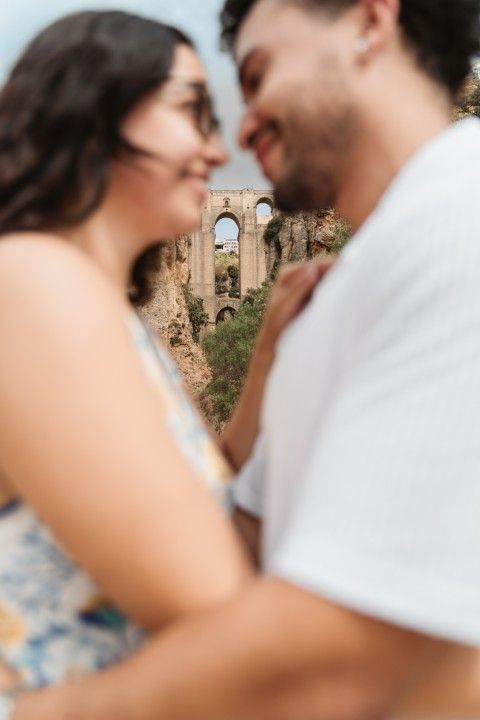
There is a moment when you first see the Tajo gorge from the edge of Ronda's old town that takes some time to absorb. The ground simply ends. A hundred metres below, the Guadalevín river threads through a canyon that has been cutting through the limestone for longer than the city has existed above it. The Puente Nuevo crosses it in a single span of eighteenth-century stone, as much sculpture as bridge. Most people see it and immediately understand why couples choose this place to get married.
Ronda occupies a position in the Andalusian landscape that no other destination quite replicates. It is not the coast. It is not Seville or Granada. It sits in the mountains of the Serranía de Ronda at over seven hundred metres, with a light and a pace that are entirely its own. For couples who want a wedding that feels rooted in a specific place rather than in a recognisable category of venue, Ronda is one of the strongest answers available in the south of Spain.
We cover wedding photography and film in Ronda from our base in Málaga, and we return to this landscape regularly. What follows is our honest perspective on venues, light, logistics, and the specific qualities that make Ronda work so distinctly as a wedding destination.
What Makes Ronda Different as a Wedding Destination
The honest answer is geography, and everything that flows from it.
Most wedding destinations on the Costa del Sol are built around warmth, sea access, and a polished resort infrastructure. Ronda offers none of those things, and that is precisely its appeal. At altitude, the landscape changes. The light is crisper and more directional than on the coast. The air is clear in a way that coastal humidity never quite allows. The surrounding countryside of cork oak forests, limestone outcrops, and rolling valleys looks nothing like anything within an hour's drive of the sea.
The town itself has an entirely different character from the resort towns of the western Costa del Sol. The old quarter, La Ciudad, is one of the best-preserved historic centres in Andalucía: narrow whitewashed lanes, Arab baths from the thirteenth century, a bullring that has been standing since 1785, and a density of carved stone and iron balconies that photography finds endlessly useful. None of it was designed for weddings. It is simply what the place is, and that authenticity is something couples and guests feel immediately.
The guest experience also tends to be stronger here than at more anonymous resort destinations. Ronda is compact enough to be walkable, distinctive enough to hold a visitor's attention for two or three days, and far enough from the coast that arriving here feels like a genuine journey. Guests who have been brought somewhere specific, somewhere with a visible reason to exist, tend to be more present at the celebration than those passing through an interchangeable resort.
What Couples Should Know Before Choosing Ronda
Ronda rewards couples who understand what it is and plan accordingly.
The altitude changes the logistics. At 750 metres, temperatures in Ronda are noticeably cooler than on the coast, sometimes by five to eight degrees Celsius. In summer, this is a genuine advantage: afternoon ceremonies in Ronda are comfortable when the coast is at its most demanding. In spring and autumn, it means evenings can turn cool, and guests who have packed for a beach holiday may find themselves underdressed. Building a layer into the guest guidance is worth doing.
The drive from Málaga is part of the experience. Most couples bringing guests from Málaga airport will need to plan a transfer of approximately 75 to 90 minutes. The road climbs through the Serranía and the views on the approach are striking, but the route is winding in places and coach transfers need to be sized and timed carefully. A couple who does this planning thoughtfully, with comfortable transport and clear communication, tends to find that the journey builds rather than drains the anticipation. A couple who underestimates it will find the logistics can fragment the day before it begins.
Ronda is not a logistics-first destination. The town has no major resort hotels with dedicated wedding coordination teams on the Costa del Sol model. There are no venues that handle three weddings a weekend with established supplier networks for every need. What Ronda has instead is a smaller, more independent infrastructure of venues, planners, and caterers who work here specifically and know the town well. The right local planner makes a significant difference here, more so than at a large coastal resort.
The tourist presence is real, especially in the day. The Puente Nuevo and the gorge viewpoint are among the most visited sites in Andalucía, and during peak tourist hours the area around the bridge is busy. This has practical implications for outdoor portrait sessions and ceremony locations that are visible from public viewing areas. Planning the photography around the early morning or late afternoon, when visitor numbers drop and the light is better anyway, resolves most of this. But it is worth knowing before you commit.
The Parador de Ronda
The Parador de Ronda is the centre of gravity for most couples considering a wedding here, and its position earns that reputation.
The building occupies the southern edge of Ronda's old town, on the Plaza de España, where the ground drops away directly into the gorge. The terrace faces the Puente Nuevo and the full depth of the Tajo, and from that position the view is not incidental to the setting: it is the setting. When a ceremony is positioned on that terrace, with the gorge behind the couple and the bridge visible above them, the backdrop does something that no amount of floral design or venue styling can replicate. It simply exists, and it communicates something about the scale and weight of what the couple is choosing.
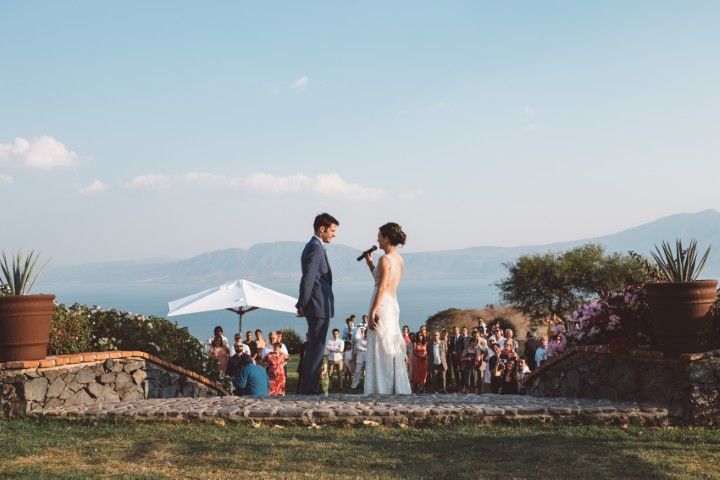
For photography, the afternoon light is the key variable. The gorge faces roughly east, and as the sun moves west through the afternoon it catches the stone faces of the canyon walls and the architecture of the bridge in a light that is warm, raking, and deeply photographic. This window, from around four in the afternoon through to sunset, is when the setting is at its most powerful. Portrait sessions built around this timing produce images that feel genuinely specific to this place rather than generic destination photography.
The Parador itself is a converted municipal building, cleaner and more contemporary in its interior than the older parador properties elsewhere in Spain. The ceremony, cocktail, and dining spaces are formal without being excessive. The venue works well for celebrations of moderate scale - it is not designed for very large guest lists, and its appeal is strongest for couples who want to feel they have the place, and the view, to themselves.
It is worth noting that the Parador, as part of the national parador network, has specific procedures for weddings and events that require advance coordination. Booking early and working with a local planner familiar with the process is advisable.
Hotel Montelirio
Set within the old town of La Ciudad, Hotel Montelirio is a historic mansion with a different character from the Parador: more intimate, more private, and with gorge views from a terrace that feels genuinely secluded rather than publicly positioned.
For smaller celebrations, this distinction matters. A wedding of twenty or thirty guests at Montelirio has a quality that the Parador, with its slightly more formal scale, cannot quite replicate. The sense that the whole place belongs to the couple and their guests for the day is something that boutique properties deliver in a way larger venues simply cannot. The historic architecture, the arrangement of the rooms and terraces, and the carefully considered scale create an experience that feels personal and considered.
The photography opportunities here are different but strong. The gorge views from the terrace are real and unobstructed. The interiors of the mansion offer beautiful natural light in the mornings. The narrow streets of La Ciudad immediately outside provide rich material for portraits that use the architecture of the old town as their context.
Montelirio suits couples who prize intimacy and exclusivity over scale and prestige. If the Parador represents Ronda at its most formally grand, Montelirio represents it at its most quietly personal.
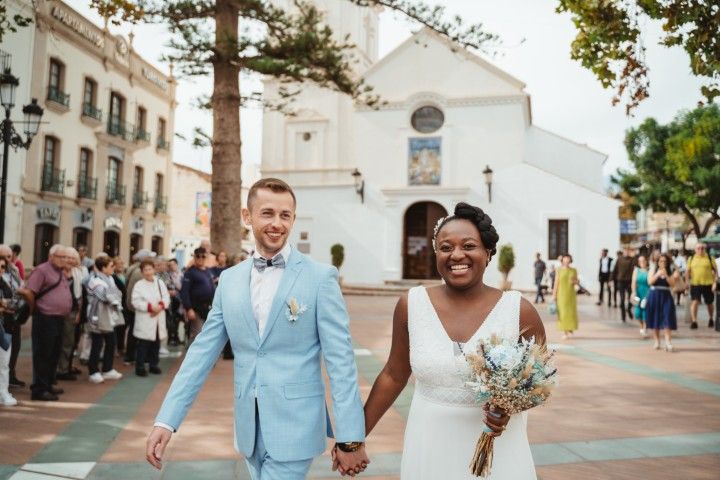
The streets beyond the hotel door are as much a part of the day as the terrace itself. Stepping out into Ronda's old town as a newly married couple, with its squares and carved stone laneways immediately around you, creates a particular kind of photograph that belongs to this place and nowhere else.
Rural Fincas and Mountain Estates in the Serranía
Beyond the town itself, the landscape around Ronda offers a different category of venue entirely.
The Serranía de Ronda is one of the most striking rural landscapes in Andalucía: cork oak forests, limestone ridges, wild mountain streams, and valleys that in spring turn a shade of green the coast never quite manages. Fincas and small rural estates in this area have a character that belongs entirely to the place. They are not purpose-built wedding venues styled for a market. They are properties with a life and a presence of their own, and that quality comes through directly in the photographs and the film.
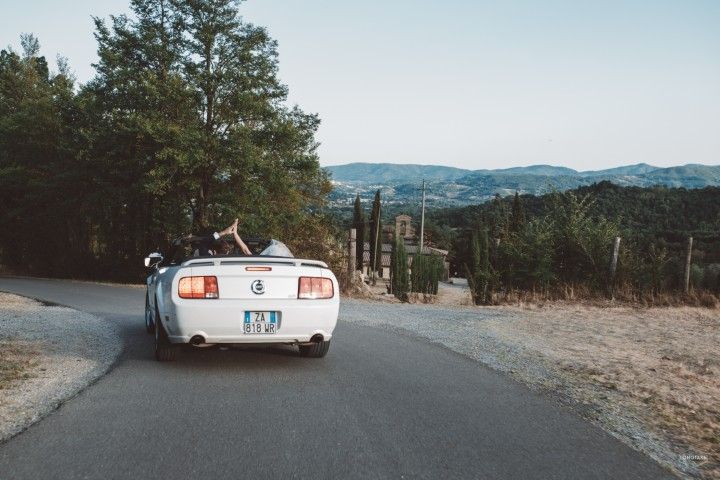
La Fuente de la Higuera is among the most consistently recommended boutique properties in the Ronda countryside. Converted from an old olive mill between Ronda and Setenil de las Bodegas, it has the texture and warmth of a building that has absorbed decades of Andalusian light and become something specific through that process. The setting is private and rural, with accommodation on site that turns a wedding into a multi-day gathering rather than a single event. For destination couples who want their guests to arrive, settle, and share the landscape for a few days together, this kind of property is exceptionally well suited.
More broadly, the area around Grazalema, Montejaque, and the broader Serranía has rural fincas that open for private weddings, some working farms and estates with ceremony space in their grounds, and occasional private villas whose owners let them for special occasions. Finding the right one requires local knowledge and advance planning, which is where a planner who knows the area specifically is genuinely valuable.
For film coverage, these rural estates are some of the most rewarding environments we work in anywhere in Andalucía. The spatial depth of a mountain landscape, the textures of old stone and cork oak bark, the way late-afternoon light falls across open fields with a ridge of the Serranía behind it: these create conditions where the footage earns its quality from the environment rather than requiring manufacture. The landscape gives you what you need. What the camera has to do is be present and observant.
Vineyard and Bodega Weddings in the Ronda Wine Region
Ronda sits at the heart of one of the youngest and most interesting wine regions in Andalucía. The Sierras de Málaga designation covers a collection of small producers in the hills around Ronda, growing grapes at altitude in conditions that produce wines with a character quite different from anything made on the coast. Several of the bodegas in the area are beginning to host weddings and events in their vineyard settings, and the visual character of a winery celebration here is genuinely distinctive.
A wedding among vineyard rows with the Serranía behind it, at the end of a day when the light has moved across the rows from east to west and the stone of the old bodega building has warmed through the afternoon, is visually specific and emotionally rich in a way that a more generic venue setting rarely is. The connection between a place and what it produces, and the way that connection runs through the texture of the buildings and the land, gives wedding coverage in these settings a particular depth.
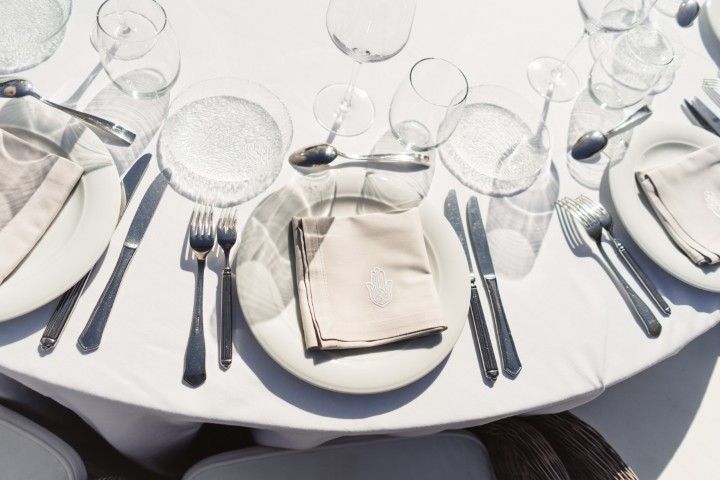
Not every bodega in the area takes weddings, and the facilities vary considerably. We recommend working with a local planner to identify which properties have the infrastructure for a full wedding day and which are better suited to smaller celebrations or ceremonies with a separate reception venue. When the setting is right and the table is laid as the evening light cools over the hills, a bodega dinner in the Ronda wine country has a quality of warmth and intimacy that more polished venues rarely achieve.
Which Couples Does Ronda Suit Best?
Not every couple is right for Ronda, and saying so directly is more useful than pretending otherwise.
Ronda works best for couples who have a genuine response to the landscape and the place itself. The couples who tend to choose this destination have seen a photograph of the gorge and felt something specific about it, or have visited Ronda and known immediately that it was where they wanted to be married. The setting is strong enough to carry a wedding, but it requires a couple who is drawn to it on its own terms rather than choosing it because it is the most obvious or well-resourced option.
It also suits couples who are comfortable with some logistical complexity. The infrastructure is less polished than a major coastal resort, the distances require real planning, and the cooler mountain climate demands more thought about guest comfort in the evenings. Couples who embrace these considerations as part of what makes Ronda distinctive, rather than treating them as obstacles, tend to have the best experience.
Ronda is particularly compelling for smaller celebrations: weddings of thirty to eighty guests, where the scale of the venue and the intimacy of the setting reinforce each other. Very large guest lists can be challenging to accommodate without losing the particular quality that makes Ronda worth choosing in the first place.
Where Ronda is a less natural fit: couples who need the full infrastructure of a luxury resort, those who want beach access or coastal light, and those who require the established international wedding supplier networks that Marbella and Málaga offer more readily. For those couples, the western Costa del Sol remains the stronger choice. Weddings in Marbella offer a different kind of prestige entirely, and the range of venues across Málaga covers almost every other need.
If you are still deciding between locations, our destination wedding guide to Spain covers how to think through these decisions, including how the character of a location shapes not just the photographs but the entire experience of the day.
Photography and Film in Ronda
Ronda is one of the most naturally photographic settings we work in, and the reasons are structural rather than incidental.
The altitude changes the light. At over seven hundred metres, the atmosphere is cleaner and less hazy than on the coast, and the light behaves with a clarity and directness that is different in quality from the softened warmth of a coastal afternoon. Colours render more crisply. Shadows have definition. The golden hour is genuinely golden rather than diffused. This is not better or worse than coastal light, but it is specific, and working with it rather than against it produces images that could only have come from this landscape.
The gorge itself is extraordinary to work with but requires planning. The Puente Nuevo at its best is in late afternoon when the western sun catches the south face of the bridge and the canyon walls begin to glow. At midday, the gorge is in partial shadow and the light from directly above produces the same unflattering conditions it creates everywhere. Portrait sessions positioned in the gorge area in the early morning, before the main tourist hours, or in the hour before sunset, produce the most genuinely cinematic results. Knowing this before the day begins, rather than discovering it under pressure, makes an enormous difference to what the session achieves.
The old town streets of La Ciudad offer excellent secondary portrait material. The narrow whitewashed lanes, the iron balconies, the carved stone doorways, and the occasional framed views across the valley provide a rich visual vocabulary that is specific to Ronda and nowhere else. These locations require no special access and can be used at almost any point in the day, though they are most beautiful in the softer light of late afternoon.
For cinematic wedding film, Ronda produces footage with a sense of environment that more uniform venues cannot replicate. The visual variety within a short area is significant: the gorge and bridge as the architectural centrepiece, the old town streets as intimate texture, the surrounding Serranía landscape as spatial depth and context. A film edited from this material has a natural sense of place that belongs entirely to Ronda rather than to a generalised idea of a Spanish wedding.
Audio in Ronda requires some preparation. Outdoor ceremony positions near the gorge viewpoint can carry wind in the afternoon, especially as warm valley air rises. We use radio microphone coverage for vow audio regardless of conditions, because the emotional core of a wedding film is too important to leave to chance in an exposed outdoor environment.
One practical note on timing for couples considering film: the light on the gorge is at its most powerful in the final ninety minutes before sunset. If the ceremony and reception are structured to allow a portrait session in this window, the visual quality of the coverage across the day as a whole is significantly stronger than if the portraits are forced into a midday or early afternoon slot. This is a conversation worth having early in the planning process, not after the timeline has already been set.
We Would Be Happy to Help
Whether you are in the early stages of wondering whether Ronda is right for you, or you already know and are looking for photographers and filmmakers who know this landscape specifically, we would love to hear from you.
We cover wedding photography and film in Ronda from our base in Málaga. The Serranía is within our regular working territory, no travel fees apply, and we have a genuine familiarity with the light and rhythms of this destination that makes a real difference to the coverage we produce here.
If you are still forming your thinking about venues and locations, our guides to wedding venues in Málaga and wedding venues in Marbella cover those areas in the same depth and from the same perspective. Many couples weigh up two or three locations before deciding, and it is a decision worth taking time over. The setting shapes the whole character of the day.
If you are wondering whether to include film alongside photography for your Ronda wedding, our piece on whether wedding videography is worth it addresses that question honestly, and the landscape around Ronda makes a particularly strong case for the film argument.
Ronda's altitude changes the seasonal calculation compared with the coast, and it is one of the few places in the province where a July wedding is genuinely comfortable. The best time of year to get married on the Costa del Sol sets out the year in detail. Because the gorge light is so specific about timing, our wedding day timeline guide is also worth reading before the schedule is fixed. And for couples drawn to Ronda for its landscape rather than its infrastructure, an elopement or small wedding in Andalucía is a shape that suits this town particularly well.
For couples considering budget and package structure, our pricing page gives a clear overview of what photography and film coverage includes. You can also check your date to see whether we are free, or get in touch directly if you would rather start with a conversation. We are always glad to be involved early in the planning process. Ronda rewards that kind of preparation.
Planning a wedding in Málaga?
We are based on the Costa del Sol and photograph and film weddings across Málaga, Marbella, Nerja, and wider Andalusia. Tell us your date and venue - we are happy to help before you have made any decisions.
Frequently Asked Questions
- What are the best wedding venues in Ronda?
- The most distinctive wedding venues in Ronda include the Parador de Ronda, which offers ceremony settings directly overlooking the Tajo gorge and Puente Nuevo, and Hotel Montelirio, a historic mansion in the old town with intimate gorge views. Beyond the town itself, the Serranía de Ronda has a number of rural fincas and boutique estates suited to full-day countryside celebrations. The best choice depends entirely on the scale and atmosphere you want - from the grandeur of the gorge setting to the seclusion of a mountain finca.
- How far is Ronda from Málaga?
- Ronda is approximately 100 kilometres from Málaga city, usually around 75 to 90 minutes by road depending on your route and traffic. The drive itself is scenic and part of the experience - the road climbs through the Serranía and the landscape changes noticeably as you leave the coast behind. For couples bringing guests from Málaga airport, the transfer is manageable but worth building clearly into the guest logistics plan.
- Is Ronda a good place to get married in Spain?
- For the right couple, Ronda is exceptional. It offers something genuinely distinct from the coastal resorts of the Costa del Sol - dramatic mountain landscape, historic architecture, a quality of light that is particular to the altitude, and a sense of place that is difficult to find in more resort-oriented destinations. It suits couples who want a setting that communicates something specific about who they are, and who are drawn to landscape and atmosphere over resort infrastructure.
- What time of year is best for a wedding in Ronda?
- Late spring, from late April through June, and early autumn, in September and October, offer the most compelling conditions in Ronda. The landscape is at its most vivid in spring, the temperatures are comfortable, and the light is excellent. Autumn brings cleaner air after the summer, beautiful late-afternoon colour, and smaller visitor numbers. July and August are warmer than the coast but still manageable at Ronda's altitude - much more comfortable than a coastal wedding in peak summer heat. Winter and early spring can be cool and occasionally wet, which suits some couples but requires careful venue planning.
- Can foreigners get legally married in Ronda?
- Yes, but the legal requirements for foreign nationals marrying in Spain apply in Ronda as they do anywhere else in the country. The process involves paperwork, translation, and coordination with the local civil registry, and it can be time-consuming and unpredictable. Many international couples choose to complete the legal ceremony at home and hold a symbolic ceremony in Ronda instead, which gives them complete freedom over location, timing, and structure. We always recommend confirming current legal requirements with a qualified professional or your consulate before making any assumptions.
- Do you photograph and film weddings in Ronda?
- Yes. Ronda is one of the locations we cover from our base in Málaga, and it is somewhere we return to with genuine enthusiasm. The landscape, the light, and the dramatic setting create conditions that are consistently rewarding to work in. We cover the full Serranía de Ronda area with no travel fees from Málaga. If you are considering Ronda for your wedding, we are always happy to talk through venues, timing, and how the day might unfold.
Planning a wedding in Málaga?
We cover the full Costa del Sol and wider Andalucía. Whether you have already chosen your venue or are still exploring, we would be glad to help - and to capture the day.