
Photography & Videography · 8 April 2026
Is Wedding Videography Worth It? An Honest Answer
Most couples ask this question at some point during planning. Here is our honest answer: not a sales pitch, but a genuine look at what wedding film actually captures, when it matters most, and when photography alone might be the right call.
Most couples who ask this question are not really asking about video. They are asking about regret: whether they will be one of the couples who looks back in five years and wishes they had made a different call.
That is the version of the question worth answering honestly.
We create cinematic wedding films for couples getting married across Málaga and the Costa del Sol, and we have had this conversation many times. What follows is not a sales pitch. It is the most useful and honest answer we can give.
Why the hesitation is completely understandable
The concern about videography almost always comes from the same few places.
Cost. Videography represents a real addition to a wedding budget, and couples who are already investing significantly in a venue, catering, flowers, and photography reasonably question whether another line item is justified. It is a fair concern, and we will come back to it directly.
Practicality. Will you actually watch it? Where do you even watch it these days? Is this one of those things that feels important to have until you have it, and then sits unwatched on a hard drive somewhere?
The feeling of being observed. Having a camera filming you for a full day is a lot. Some couples worry that it will make them feel self-conscious, or that it will affect how present they are able to be in their own wedding. This concern is real, and it is worth taking seriously.
All of these hesitations are reasonable. They deserve genuine answers, not reassuring dismissals.
What photography does, and where it stops
Wedding photography, done well, is the art of recognising a moment and committing it to a frame. It works by selection: finding the precise instant that holds the most meaning and freezing it in a way that makes it feel inevitable.
The best wedding photographs have a quality that is genuinely powerful. They become the images you return to: the ones printed and framed, shared with family, kept on a phone long after the rest of the gallery has been filed away. They define the visual memory of the day.
But a wedding is not a series of instants. It is a day that moves through many hours. It has temperature and pace and sound. Things are said out loud that will never exist again in exactly that form. The atmosphere of a venue changes as afternoon becomes evening. People react to each other in ways that take several seconds, not one.
Photography, by its nature, cannot hold these things. It can suggest them beautifully. The best documentary photographers find ways to imply movement and warmth and time through a single frame. But what photography implies, film holds directly.
What a wedding film captures
The clearest way to understand the difference is to think through the moments that matter most.
The vows. A photograph of two people facing each other during their ceremony can be deeply moving. It shows the posture, the expression, the quality of light, the faces of the people watching. But the words spoken during those vows, words that may be the most honest and carefully considered things two people have ever said out loud to each other, exist only in that room, on that day. A film holds them. Not as a memory that softens slightly each year, but as something that can be returned to exactly as it was.
The speeches. Speeches are among the most unrepeatable things at a wedding. Someone who has known the couple for decades stands up and says something they have never said in public before. The room reacts. There is laughter, sometimes silence, the particular quality of attention that comes when a hundred people genuinely care about what is being said. Photography can show you the speaker and the couple listening. Film gives you the whole of it.
The atmosphere of the day. This is harder to define, but it is one of the most significant things film preserves. The ambient experience of a specific afternoon and evening is something that still images gesture toward but cannot fully contain: the warmth of it, the pace of it, the sound of wind through the trees, the laughter carrying across a garden. A film holds the texture of the day in a way that lets you step back into it, not just look at it.
Why destination weddings in Southern Spain are especially well suited to film
For destination weddings, and particularly for weddings in southern Spain, there is a specific argument for film that goes beyond the general case.
When a couple chooses a destination for their wedding, the place itself is part of the experience. The setting is not just a backdrop. It is something they chose deliberately: the quality of light on a late Spanish afternoon, the warmth of an evening at a rural finca with the Andalusian hills behind it, the sound of the sea at a coastal ceremony, the particular pace of a Spanish summer night that lasts well past midnight.
Film preserves all of this in a way that photographs alone cannot fully achieve: not just who was there and what they wore, but what it felt like to be there. The specific, irreplaceable quality of a place and an evening that will not happen again.
For international couples whose family and close friends could not all make the journey, a wedding film also brings people who were not present closer to the full experience. A photograph tells them what the day looked like. A film brings them closer to what it felt like.
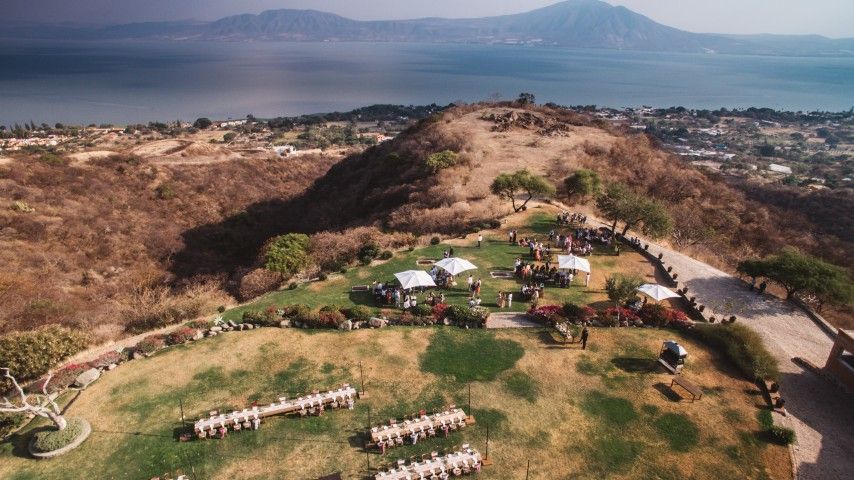
Johan and Louise's wedding at Cortijo Bravo is a clear example of this: a rural estate in the Málaga countryside where the landscape, the light, and the ambient atmosphere of the day are as much a part of the story as anything that was planned. Jeffrey and Elise's celebration at Finca La Familia Naranja is another: a spring wedding in an orange grove where the photographs and the film each hold different things, and together hold the day completely.
See what wedding film looks like
A wedding film from Cortijo Bravo in the Málaga countryside, showing how film holds the atmosphere, light, and sound of a full day in southern Spain.
Is wedding videography actually worth the cost?
This is the question beneath the question, and it deserves a straight answer.
For most couples: yes. But the more useful thing to say is that it depends on what you are weighing it against.
If the real choice is between excellent photography and a compromised photography package with a mediocre film added on, excellent photography is almost certainly the better decision. The visual record of the day is the foundation, and it should not be weakened to fund something supplementary.
There are also couples who genuinely know themselves well enough to say: we are not film-watching people. Our connection to a day lives through images, through the still frame rather than the moving one. For those couples, investing significantly in a medium they will not connect with as naturally is not necessarily the right call.
And for very private, very intimate ceremonies where the emphasis is on presence over documentation and the guest list is small and deliberately chosen, a simpler approach is sometimes more appropriate.
The couples who most fully use and return to their wedding films tend to be those who place a high value on the atmosphere and experience of the day. The sound of it. The feel of it. The particular way an evening unfolded. If you are someone who, when you remember a place or an evening, remembers how it felt rather than only how it looked: film is the medium that holds that.
How the value of film changes over time
Here is the observation we hear most often when couples reflect on this decision after the fact.
In the months immediately after the wedding, photographs tend to get more active use. They are shared, sent to family, printed, put into albums. The film is watched and loved, and then, often, life moves quickly and it is not returned to as frequently.
Then the years pass.
Several years after the wedding, many couples describe the film as the more emotionally significant thing. Not because the photographs have stopped mattering (they remain central), but because the film is the only place where the day still happens. Where the vows are still being said in the original voices, in the original words. Where people who have changed or aged are still exactly as they were on that evening. Where the speeches are still being delivered and the room is still reacting.
"Several years after the wedding, many couples describe the film as the more emotionally significant thing, because it is the only place where the day still happens."
This is not something we say to push anyone toward a decision. It is simply what we hear from couples who have both.
One couple put it this way after receiving their film:
"Christian was our videographer for our wedding day. He made us feel so comfortable that we barely noticed he was there. We've just received our film and I honestly have goosebumps. It's amazing. It brings our whole day back to us. His work is outstanding and I could not recommend him more."
- Lauren
What to look for if you decide to book a filmmaker
If film is right for your day, the approach of the filmmaker matters at least as much as the decision to book.
A documentary or story-led style, where the filmmaker works with the day rather than around it, capturing what genuinely happens rather than directing people into position, tends to produce the most honest and lasting results. The difference between a film that documents a day as it actually unfolded and one that choreographs it for the camera is significant, and it is usually clear within the first few minutes of watching.
This is also the answer to the concern about feeling observed. A skilled documentary filmmaker is not a presence you notice. They move quietly through the day, responsive to what is happening rather than imposing on it. Most couples who work with a good documentary filmmaker report, at the end of the day, that they barely registered the camera.
When reviewing filmmaker portfolios, pay close attention to the audio. How are the vows and speeches handled? What does the ambient sound of the venue feel like? Audio is often where the emotional core of a wedding film lives, and it is frequently where weaker films fall short.
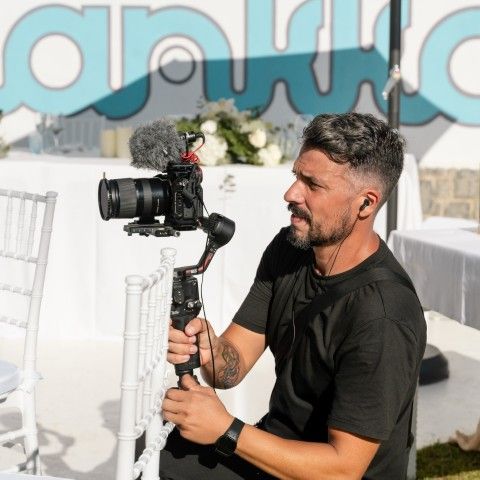
At Longtake Film, our approach to cinematic wedding films puts the story before everything else. The technical side matters enormously, but it always serves the film, and the film always serves the couple. What we are trying to make is something that, when watched years from now, still feels entirely true to the day it came from.
A practical note on when to decide
One thing worth knowing before leaving the decision open-ended: experienced wedding filmmakers book at the same pace as photographers. On the Costa del Sol, late spring through early autumn dates fill early, and by the time most couples return to the videography question, the availability picture for their date has sometimes already changed.
If you are genuinely considering film, it is worth having the conversation early rather than returning to it once everything else is settled. You can check our availability for your date at any stage of planning, without any obligation. If you are still uncertain, that is a completely reasonable place to be, and a conversation with a team you are considering is usually the most useful next step.
For couples in the early stages of planning a destination wedding in southern Spain, our destination wedding guide covers the broader questions around timing, ceremony types, and what makes this part of the world such a distinctive setting for an international celebration.
Our honest answer
Wedding videography is not the right choice for every couple.
But for many couples who ask this question and then decide to include it, the film becomes one of the things they return to in ways they did not quite anticipate when they were making the decision. The words that were said. The voices. The sound of a particular evening. The faces of people who were there, exactly as they were then.
These things live in film in a way that no other medium quite holds.
If you would like to see what that looks like in practice, or if you have questions about what film coverage would mean for your specific day, we would be glad to talk. You can explore our approach to wedding films, see how our packages are priced, or get in touch directly. We are always happy to have the conversation at whatever stage of planning you are at.
For couples planning a wedding in Marbella or along the western Costa del Sol, our guide to wedding videography in Marbella explains how we approach filming in that part of the region specifically.
If your question is less about whether to have film and more about how much coverage you need, how many hours of wedding photography and film you actually need works through that decision. And if you are planning something small, film does something quite specific at an elopement or intimate wedding, where there are no speeches or reception and the ceremony carries the whole day.
Planning a wedding in Málaga?
We are based on the Costa del Sol and photograph and film weddings across Málaga, Marbella, Nerja, and wider Andalusia. Tell us your date and venue - we are happy to help before you have made any decisions.
Frequently Asked Questions
- Is wedding videography worth the money?
- For most couples, yes, but the honest answer depends on what you value. A wedding film preserves things photographs cannot: the sound of your vows, the laughter during speeches, the ambient atmosphere of the day as it actually felt. Most couples who have their film report watching it repeatedly over the years and finding it more emotionally significant as time passes. Those who skipped video rarely change their minds. They simply do not know what they are missing.
- Do I need both a photographer and a videographer?
- Not necessarily, but they do genuinely different things. Photography gives you the best individual instants of the day, carefully selected and beautifully rendered. Film gives you the sequence, the sound, the movement, and the atmosphere as it actually unfolded. For couples who want to preserve both the visual record and the lived experience of the day, having both tends to be the more complete choice. For couples with a tighter budget, excellent photography remains the foundation.
- Can I decide to add video later after booking my photographer?
- Yes, but availability matters. Experienced wedding filmmakers book up at the same pace as photographers, and the most sought-after dates on the Costa del Sol, from late spring through early autumn, fill well in advance. If you are considering adding film, it is worth exploring availability early rather than leaving it to a later stage of planning.
- Is wedding videography more valuable for destination weddings in Spain?
- There is a strong argument for this. Destination weddings in places like Málaga or the Costa del Sol involve a setting, a light, a sound, and an atmosphere that photographs alone can only partially preserve. The warmth of a Spanish summer evening, the sound of vows carried on a sea breeze, the ambient texture of an outdoor reception in the Andalusian countryside: these details live in film in a way that still images cannot fully hold.
- How long is a typical wedding film?
- This varies by filmmaker and package. A highlight film, sometimes called a short film, usually runs between three and eight minutes and captures the emotional arc of the day in a condensed, cinematic form. Longer edits preserve specific moments in full: complete vows, speeches, and the broader narrative of the day. Many couples choose a combination: something they can share easily, and something they can return to in full.
Planning a wedding in Málaga?
We cover the full Costa del Sol and wider Andalucía. Whether you have already chosen your venue or are still exploring, we would be glad to help - and to capture the day.