
Planning Guides · 4 April 2026
Destination Wedding in Spain: Everything You Need to Know
Your practical guide to planning a wedding on the Costa del Sol as an international couple - covering legal requirements, ceremony types, timing, venues, and how to get the most from the light and landscape.
If you are reading this, chances are you have already pictured it: a long table under string lights, warm stone underfoot, the sound of someone laughing in the distance, and the kind of light that makes everything feel golden. Spain does that to people.
As a wedding photography and filmmaking team based in Málaga, we have spent years working alongside international couples who chose southern Spain for their wedding day. And while Spain absolutely delivers on atmosphere, planning a destination wedding here involves a set of decisions that are quite different from organising one at home.
This guide is written for couples from the UK, US, and Europe who are seriously considering a destination wedding in Spain. We will walk through the practical side of things: legal paperwork, ceremony types, timing, venues, seasons, and the kind of planning details that can genuinely shape how the day feels and flows.
Whether you are looking at a destination wedding in Málaga, a private villa in Marbella, or a hillside finca near Ronda, this is the article we wish every couple could read before they start.
Why So Many International Couples Choose Spain for Their Wedding
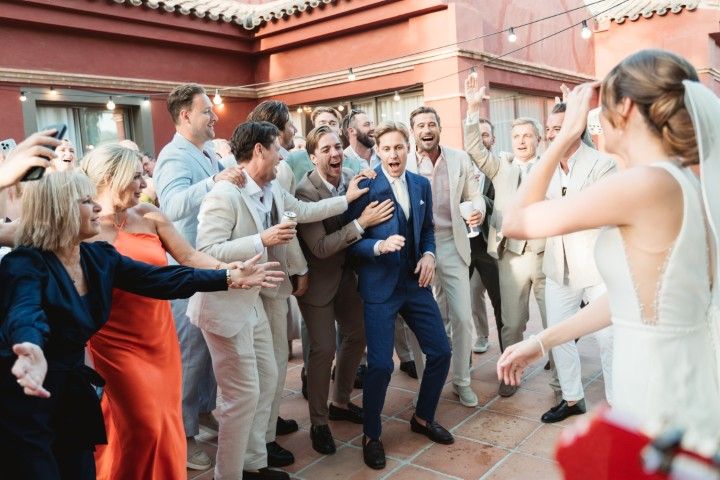
Spain is not just a popular holiday destination. It is one of the most requested wedding locations in Europe, and the reasons go well beyond sunshine.
The climate is a big draw, of course. Southern Spain offers reliable warmth from April through October, with long evenings and soft light that photographers and filmmakers love. But the appeal goes deeper than weather.
Spain has excellent international flight connections. Málaga airport alone handles direct flights from dozens of cities across the UK, Europe, and beyond. For couples with guest lists that span multiple countries, that accessibility matters enormously. Getting people to your wedding should not require three connections and a car rental.
There is also the hospitality. Spanish culture is built around gathering, eating well, and celebrating together. That energy translates naturally to weddings. Venues here tend to embrace long, relaxed evenings. Dinner starts later. People linger. The pace feels generous rather than rushed.
Add to that a wide range of venue styles, from luxury resorts and private villas to rustic fincas and beachside terraces, and you start to see why Spain competes so well with Italy, Portugal, and the south of France. In many cases, it offers comparable beauty and warmth at a more accessible price point, with fewer logistical headaches.
For couples who want a multi-day celebration, with a welcome dinner the night before and a pool day after the wedding, Spain is especially well suited. The infrastructure supports it, and the culture encourages it.
Why the Costa del Sol Is One of the Best Places for a Destination Wedding in Spain
The Costa del Sol stretches along the southern coast of Andalucía, from Nerja in the east through Málaga, Torremolinos, and Benalmádena and out towards Marbella, Estepona, and beyond. It is one of the most popular areas in Spain for destination weddings, and the reasons are both practical and aesthetic.
Málaga airport is central to everything. Most European cities are a two to three hour flight away, and the UK is even closer. Once guests land, they can be at their hotel in Marbella within 45 minutes, or in Nerja in about the same time. That ease of access is a genuine advantage when you are asking people to travel for your wedding.
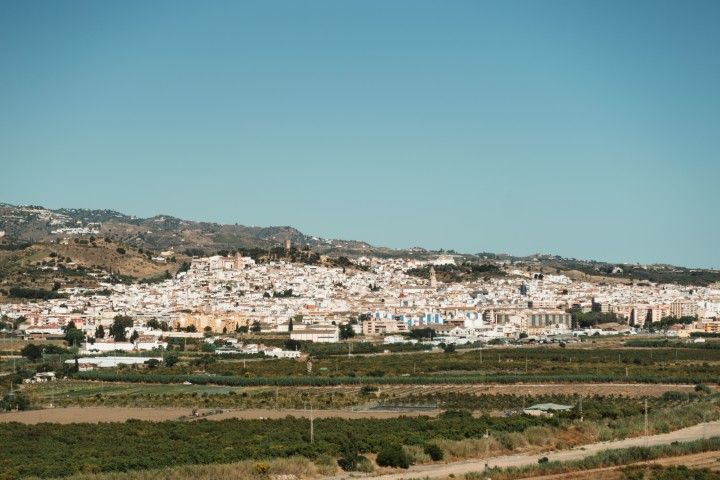
The landscape is varied and striking. Within a short drive, you can find whitewashed hillside villages, dramatic mountain backdrops, Mediterranean coastline, and some of the most well-maintained private estates in Spain. Areas like Benahavís, the hills above Marbella, and the countryside around Estepona offer settings that feel private and cinematic without being remote.
The region also has a well-developed wedding industry. Experienced planners, caterers, florists, and suppliers work here regularly, and many of them are accustomed to working with international couples. That makes coordination smoother, especially when language or logistics could otherwise become a challenge.
For couples considering a destination wedding in Marbella or the surrounding area, the Costa del Sol strikes a rare balance: elegant but relaxed, well-connected but not overcrowded, and visually stunning without requiring hours of travel from the airport.
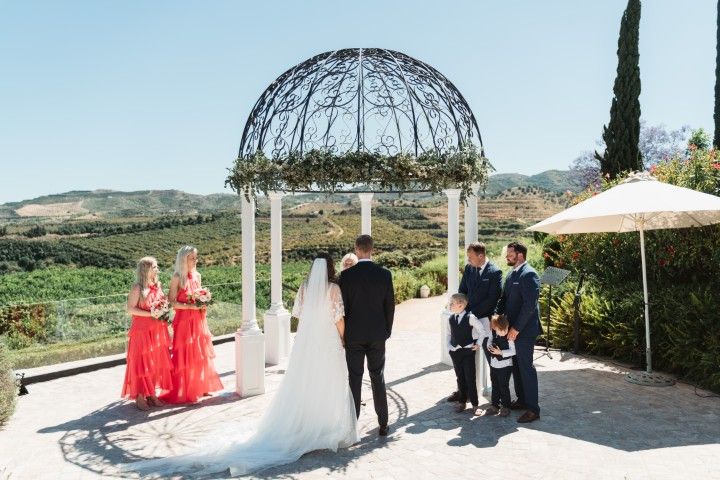
Legal Requirements for Getting Married in Spain
This is one of the first questions international couples ask, and the answer is not always straightforward.
Getting legally married in Spain is possible for foreign nationals, but the process can be complex. The paperwork required depends on your nationality, your residency status, and your local civil registry. In many cases, it involves gathering documents from your home country, having them translated, apostilled, and submitted well in advance. Processing times can be unpredictable, and requirements sometimes change.
For couples from the UK, post-Brexit rules have added another layer of complexity. US couples face a different set of documentation requirements. European citizens may find the process somewhat simpler depending on their country of origin, but it is rarely seamless.
Because of this, a large number of international couples choose to handle the legal marriage at home and hold a symbolic ceremony in Spain. This is an extremely common and widely accepted approach. It allows you to focus your time in Spain on the celebration itself, rather than navigating bureaucracy under time pressure.
A note of caution: Legal requirements for marriage in Spain can and do change. We always recommend confirming the current rules with your wedding planner, a local lawyer, your consulate, or the relevant civil registry. Do not rely solely on any single online source, including this one.
Legal Ceremony vs Symbolic Ceremony in Spain
Understanding the difference between these two options is one of the most important early decisions for any international couple planning a destination wedding in Spain.
A legal ceremony is one that is officially recognised by the Spanish state. It involves civil or religious proceedings, requires the formal paperwork mentioned above, and must be conducted by an authorised officiant. While it is the right choice for some couples, the process can restrict your options in terms of timing, location, and the overall feel of the ceremony.
A symbolic ceremony, on the other hand, is a celebration of your commitment that does not carry legal weight in Spain. Because you will have already completed the legal formalities at home, the ceremony here becomes entirely yours to shape. You can hold it wherever you like, at whatever time suits the day, with whichever words and structure feel meaningful to you.
This flexibility is one of the biggest reasons why a symbolic ceremony in Spain has become the preferred route for most destination couples. You are not tied to a specific municipal building or church schedule. You can hold your ceremony on a terrace overlooking the sea, in the courtyard of a private villa, or under a centuries-old olive tree. There are no restrictions on who can officiate, and you can write your own vows without worrying about legal phrasing.
From a photography and film perspective, symbolic ceremonies also allow much more creative freedom. You can choose the time of day based on the best light, position the ceremony to face the most beautiful backdrop, and avoid the constraints that sometimes come with official venues. That freedom often translates into a more relaxed, personal, and visually striking ceremony.
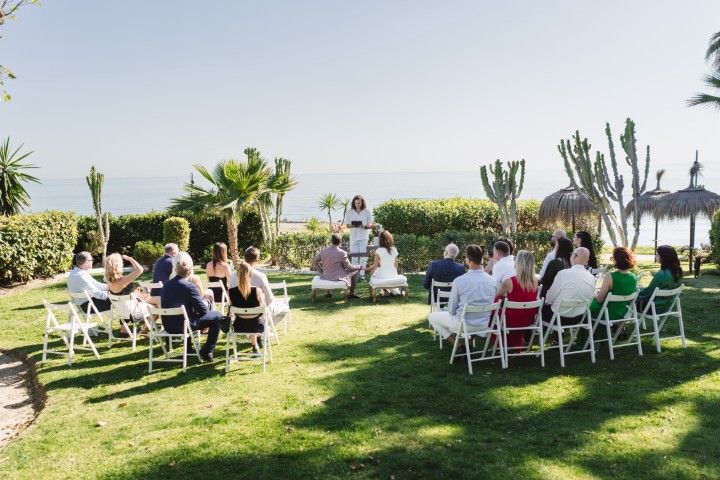
Best Time of Year for a Destination Wedding in Southern Spain
Choosing the right season is about more than just avoiding rain. In southern Spain, the time of year affects temperature, light quality, guest comfort, and how the entire day is structured.
Late spring (May to mid-June) is one of the most beautiful windows. Temperatures are warm but comfortable, the landscape is green, and the light is exceptional. Days are long without being brutally hot, and the tourist season has not yet peaked. For couples who want outdoor portraits without wilting, this is an ideal stretch.
High summer (July and August) is popular but demanding. Temperatures regularly exceed 35 degrees Celsius, and midday sun is harsh. Weddings in this period almost always need to start later in the day, often with ceremonies beginning at 7pm or even later. The long evenings are beautiful, but the heat requires careful planning around guest comfort, ceremony shade, and portrait timing.
Early autumn (September and October) is another excellent choice. The worst of the summer heat has passed, but the days are still warm and sunny. September, in particular, offers beautiful light and fewer tourists. October brings slightly shorter days and a small chance of rain, but the atmosphere can be wonderfully intimate.
Late autumn and winter are less common for destination weddings, but not impossible. December through February in Málaga and the Costa del Sol can offer mild, sunny days with temperatures around 15 to 18 degrees. For smaller, more intimate celebrations, it can work beautifully.
When thinking about seasons, consider what matters most to your guests. A wedding in August might suit a couple who love the heat, but it will test guests who are not used to it. A May wedding might mean slightly cooler evenings but a much more comfortable day overall.
Planning a Destination Wedding in Spain: What International Couples Should Think About Early
The earlier you start planning, the smoother things tend to go. Here are the decisions worth making first.
Book your venue and planner before anything else. The best venues on the Costa del Sol book up well in advance, especially for peak season weekends. A good local planner can guide you through the process and handle communication with Spanish suppliers, which is invaluable when there are language or time zone differences.
Think about guest logistics early. Where will people stay? How will they get from the airport to their accommodation? Is there a shuttle from the hotel to the venue? These details matter more than you might expect, especially for older guests or families with children.
Choose your ceremony time with care. In Spain, ceremony timing is not just about tradition. It directly affects the temperature, the quality of light, and how the rest of the evening flows. Starting too early in summer means battling harsh sun. Starting too late can compress the time available for portraits and dinner.
Plan for accommodation variety. Not every guest will want to stay in the same place, or at the same price point. Offering a few options at different levels helps guests feel welcome without feeling financially pressured.
Have a weather contingency. Rain is rare in summer, but it is not impossible. Spring and autumn weddings should always have a backup plan, whether that is an indoor option at your venue or a marquee that can be set up quickly.
Consider language and local suppliers. Many wedding professionals on the Costa del Sol speak excellent English, but not all do. Your planner can bridge any gaps and ensure that communication with caterers, florists, musicians, and other suppliers is clear and reliable.
What Couples Often Underestimate About Wedding Timelines in Spain
This section is close to our hearts, because it directly affects the wedding photography and films we create for our couples.
One of the most common mistakes international couples make is underestimating how much the Spanish climate and culture affect the rhythm of a wedding day.
Midday light is not your friend. Between roughly 12pm and 5pm in summer, the sun in southern Spain is directly overhead and extremely harsh. Portraits taken during this window tend to have deep shadows under the eyes, squinting expressions, and flat, unflattering light. The golden hours, when the light is warm and directional, typically fall in the two hours before sunset. Planning your ceremony and portrait time around this window makes an enormous difference to your images and film.
Spanish dinners run late. It is completely normal for dinner at a Spanish wedding to begin at 10pm or later. If you are used to UK or US wedding timelines, where dinner might start at 6 or 7pm, this shift can feel dramatic. But it works beautifully when the day is structured around it. The key is to embrace the rhythm rather than fight it.
Travel time between locations adds up. If your ceremony is at a church in Marbella, your portraits are on a beach 20 minutes away, and your reception is at a villa in the hills, you could easily lose an hour or more to driving. That lost time compresses everything else, especially couple portraits and cocktail hour. Wherever possible, choose a venue where the ceremony, portraits, and reception can happen in the same location, or very close together.
Sunset timing matters more than you think. Sunset on the Costa del Sol can range from around 7pm in early spring to nearly 10pm in midsummer. Knowing exactly when the light will be at its best on your specific date allows your photographer and filmmaker to plan around it, rather than scrambling to catch it.
Build buffer time into everything. Destination weddings involve guests who may be unfamiliar with the area, transport that may run on Mediterranean time, and a general pace that is more relaxed than what many international couples are used to. A local team that knows the area can help you build a timeline that feels spacious rather than rushed.
What International Couples Often Get Wrong When Planning a Wedding on the Costa del Sol
Even well-organised couples can underestimate a few things about planning a wedding in this part of Spain. These are the issues we see come up most often, and they are all avoidable with a little local awareness.
Choosing ceremony times based on habit rather than climate. Many couples default to a 3pm or 4pm ceremony because that is what feels normal at home. On the Costa del Sol in July, that means guests sitting in direct, punishing sunlight. In southern Spain, ceremony timing needs to follow the light and the heat, not the schedule you would use in London or New York. A ceremony at 6:30pm or 7pm in summer often produces a far more comfortable and beautiful experience.
Assuming travel times are short. The map might suggest that two locations are only 15 minutes apart, but narrow hillside roads, one-way systems in old towns, and the time it takes to load guests into transport can easily double that. When your ceremony, portrait location, and reception are in different places, the day can start to feel fragmented. Where possible, consolidate.
Not building enough buffer into the timeline. Everything in Spain tends to move at a slightly different pace. Guests arriving from abroad need time to settle. Hair and makeup can shift. Transport runs late. If the schedule is too tight, the first thing that gets cut is the couple portrait session, and that is the one thing you cannot recreate. Build in at least 30 minutes more than you think you need between key moments.
Underestimating how symbolic ceremonies improve the day. Some couples view a symbolic ceremony as a compromise, when in reality it often creates a better experience. Without the constraints of a legal process, you choose the setting, the timing, the words, and the pace. The ceremony can happen at golden hour, in the most photogenic corner of your venue, with the breeze at your back instead of in your eyes. That kind of control makes a visible difference in how the day feels and looks.
Underestimating guest logistics. When guests are arriving from three or four different countries, coordination becomes more complex than it seems. Airport transfers, accommodation spread across different towns, and varying arrival days all need planning. Couples who think through these details early, or delegate them to a strong local planner, tend to have much calmer wedding weeks.
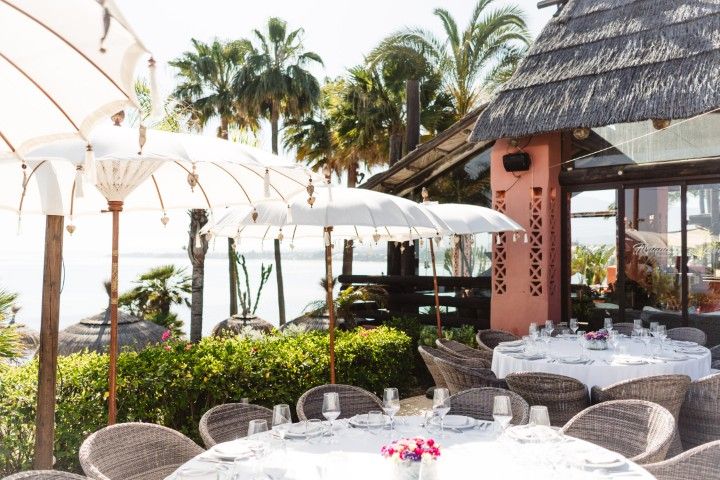
Destination Wedding Málaga and Costa del Sol: Choosing the Right Setting
The Costa del Sol offers a range of venue styles, each with its own character and practical considerations.
Luxury resorts and hotels offer convenience and infrastructure. Everything from catering to accommodation is handled on-site, which simplifies logistics enormously. Many have dedicated wedding coordinators and beautifully maintained grounds. The trade-off is that they can feel less private, especially during peak season when other guests are around.
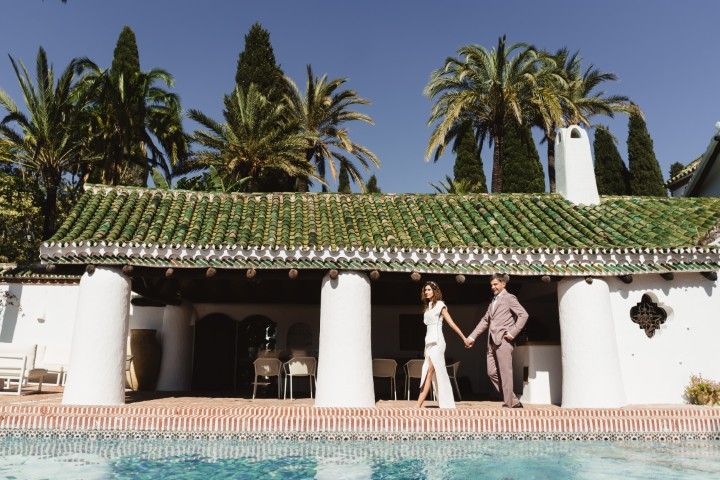
Private villas are popular with couples who want exclusivity and a sense of home. A villa wedding feels personal, intimate, and entirely yours. The challenge is that villas often require outside catering, equipment hire, and more coordination. You will need a strong planner to pull it together seamlessly.
Fincas and cortijos are traditional Andalusian country estates. They tend to offer beautiful architecture, mature gardens, and a sense of history. Many have been converted into exceptional wedding venues with excellent facilities. The countryside setting provides a natural, photogenic backdrop and a feeling of escape from the coast. Johan and Louise's wedding at Cortijo Bravo is a good example of how a traditional Andalusian estate works across a full day.
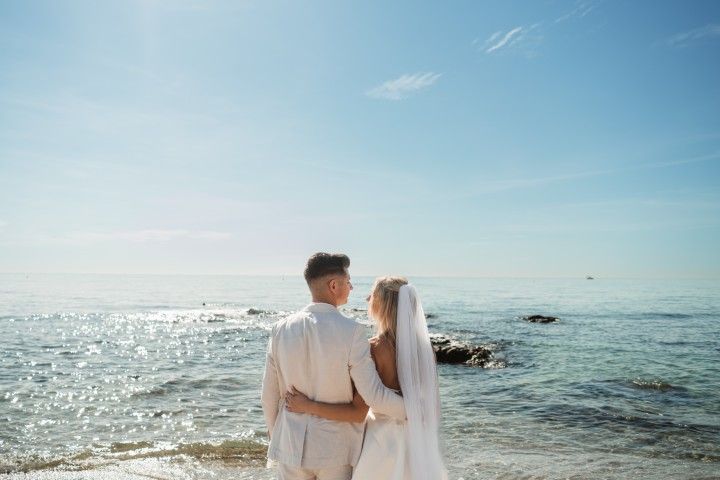
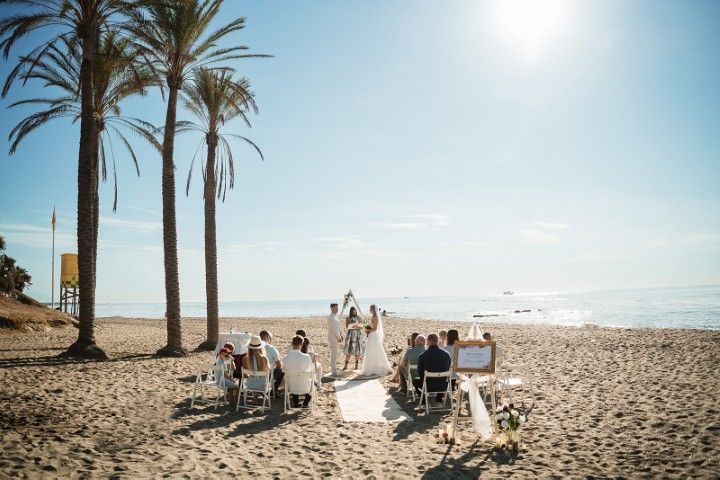
Beachside venues deliver exactly what they promise: sand, sea, and a relaxed atmosphere. They work particularly well for smaller, more casual celebrations. Keep in mind that coastal wind can be a factor, and beach ceremonies may need shade structures to protect guests from the sun. Arthur and Dace's beach wedding in Benalmádena shows what a well-planned coastal ceremony looks and feels like.
Countryside estates in the hills above the coast offer dramatic views and a sense of privacy that is hard to match. The landscape is often more green and varied than the coastline, and the elevation can bring slightly cooler temperatures in summer. These venues tend to photograph beautifully, with layered backgrounds of mountains, olive groves, and sky.
Each type of setting creates a different visual and emotional tone. When choosing, think about the atmosphere you want, the practical needs of your guest list, and how the setting will come across in your photography and film.
If you are still shortlisting venues, our guides to wedding venues in Málaga, wedding venues in Marbella, and wedding venues in Ronda cover the locations we know best, with honest insight on light, space, and how the day flows across each setting. For couples also weighing up film coverage at a Marbella venue, our guide to wedding videography in Marbella covers how filming works across the western Costa del Sol's main venue types.
How to Choose the Right Photographer and Filmmaker for a Destination Wedding in Spain
Your wedding photography and film are the things that outlast everything else. The flowers will fade, the cake will be eaten, and the details you agonised over will eventually blur. What stays is the visual record of the day, and who you choose to create that record matters deeply.
For a destination wedding in Spain, there are a few things worth prioritising.
Local knowledge is genuinely valuable. A photographer or filmmaker who knows the Costa del Sol understands where the light falls at different times of day, which corners of a venue photograph best, and how to navigate the practical realities of the Spanish landscape. That knowledge is not something you can replicate with a few hours of scouting the day before.
Experience with heat, light, and Spanish timelines makes a difference. Knowing how to work in strong Andalusian sunlight, how to guide a couple through portraits without overheating them, and how to structure coverage around a late-running Spanish evening are all things that come with time working in this specific environment.
Documentary sensitivity matters more than style trends. The best destination wedding coverage captures both the place and the people. It should feel like a genuine document of what the day was actually like, not a series of posed setups in front of scenic backdrops. Look for photographers and filmmakers who show real moments: laughter, quiet conversations, the way the light caught someone's expression at just the right second.
Your team should help you feel calm. Planning a wedding from another country is inherently stressful. A good photographer or filmmaker communicates clearly, offers practical advice on timing and logistics, and makes you feel confident that the visual side of your day is in experienced hands.
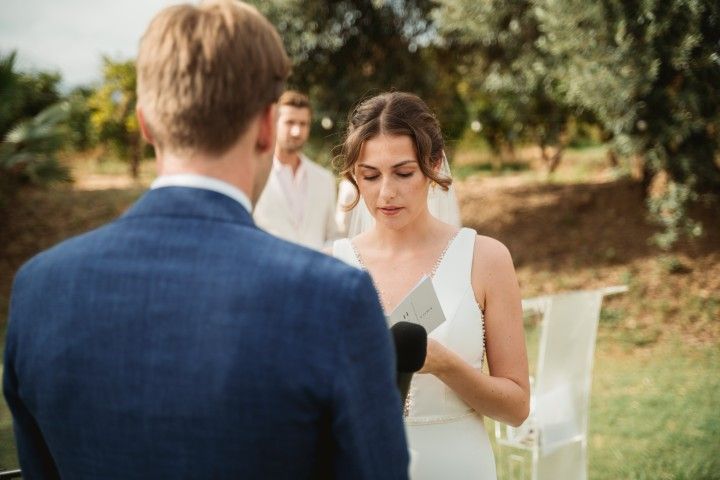
At Longtake Film, this is exactly how we approach every wedding we cover across Málaga, Marbella, and the wider Costa del Sol. You can explore our work across the Costa del Sol to see what that looks like in practice. If you are still deciding whether to include film alongside photography, our guide on whether wedding videography is worth it addresses that question honestly and from direct experience.
Final Thoughts on Planning a Destination Wedding in Spain
A destination wedding in Spain is one of the best decisions you can make, but it is also one that rewards careful, informed planning. The more you understand about how things work here, from legal paperwork and ceremony types to timelines and light, the more relaxed and present you will feel on the day itself.
The Costa del Sol, in particular, offers something that is difficult to find anywhere else: a combination of natural beauty, warmth, accessibility, and a culture that genuinely loves to celebrate. When you plan well and surround yourself with people who know the area, the result is a wedding that feels effortless, even though a great deal of thought went into making it so.
The couples who have the best experience are almost always the ones who started early, chose a strong local planner, thought carefully about timing and light, and trusted their suppliers to do what they do best.
If you already know Spain is the right country and are working through the detail, three further guides go deeper than we can here. The best time of year to get married on the Costa del Sol breaks the year down month by month. Our wedding day timeline guide explains how to schedule a day around Spanish light and heat, which is the single decision that most affects how the day feels. And if a beach ceremony is part of what you are picturing, beach weddings on the Costa del Sol sets out how they actually work, including the permissions most couples do not expect.
For couples considering something much smaller, elopements and small weddings in Andalucía covers a genuinely different way of doing this.
Planning a destination wedding on the Costa del Sol?
We create photography and films that feel natural, cinematic, and true to the day. Explore our portfolio, check your date, or get in touch to start the conversation.
Planning a wedding in Málaga?
We are based on the Costa del Sol and photograph and film weddings across Málaga, Marbella, Nerja, and wider Andalusia. Tell us your date and venue - we are happy to help before you have made any decisions.
Frequently Asked Questions
- Is Spain a good country for a destination wedding?
- Spain is one of the most popular destination wedding countries in Europe, and for good reason. It offers a warm, reliable climate, strong international flight connections, a wide variety of venues, and a culture that naturally embraces long, relaxed celebrations. Southern Spain, and the Costa del Sol in particular, combines accessibility with a landscape and atmosphere that suit both intimate and larger weddings.
- Can foreigners legally get married in Spain?
- Yes, foreign nationals can legally marry in Spain, but the process requires documentation that varies by nationality and residency status. Documents typically need to be translated, apostilled, and submitted to the local civil registry in advance. Because the process can be time-consuming and unpredictable, many international couples choose to complete the legal marriage at home and hold a symbolic ceremony in Spain instead. Always confirm current requirements with a qualified legal professional or your consulate.
- What is the difference between a legal and symbolic ceremony in Spain?
- A legal ceremony is officially recognised by the Spanish state and must follow specific procedural requirements, including authorised officiants and approved locations. A symbolic ceremony carries no legal weight but allows complete freedom over location, timing, structure, and wording. For international couples who marry legally in their home country first, a symbolic ceremony in Spain often provides a more personal, flexible, and visually beautiful experience.
- What is the best time of year for a destination wedding in Málaga?
- May, June, September, and early October are widely considered the best months for a destination wedding on the Costa del Sol. These periods offer warm temperatures, beautiful light, and comfortable conditions for guests. July and August are popular but very hot, requiring later ceremony times and careful planning around midday heat. Late autumn and winter can also work for smaller celebrations, with mild temperatures and quieter venues.
- How much does a destination wedding in Spain cost?
- Costs vary widely depending on guest count, venue type, catering, and level of service. In general, the Costa del Sol offers strong value compared to equivalent settings in Italy, southern France, or major cities in the UK and US. A destination wedding in Spain can range from modest to high-end, and a good local planner can help you build a realistic budget for your specific vision and guest list.
Planning a wedding in Málaga?
We cover the full Costa del Sol and wider Andalucía. Whether you have already chosen your venue or are still exploring, we would be glad to help - and to capture the day.