
Wedding Films · 10 April 2026
Wedding Videographer in Marbella: Cinematic Films Along the Costa del Sol
We create cinematic wedding films for couples getting married across Marbella and the Costa del Sol. This is how we approach filming in one of southern Spain's most distinctive destinations - the venues, the light, the logistics, and what makes Marbella work so consistently well for wedding film.
See what a Marbella wedding film looks like
Wedding film clip from The Westin La Quinta Marbella.
Marbella weddings have a particular pace to them. Long afternoons that soften gradually toward the sea, formal grounds maintained for decades, an international character that draws couples and guests from across Europe who have travelled specifically to be there. For a wedding film, that pace is not incidental. It is the foundation everything else is built on.
We create cinematic wedding films for couples getting married across Marbella and the wider Costa del Sol. Over years of working here we have built a detailed understanding of these venues and this landscape: the light, the logistics, the specific qualities that make each setting behave differently on film. What follows is our honest perspective on filming in Marbella, and what we think is worth considering when choosing your wedding videographer.
What Makes Marbella Well Suited to Wedding Film
The geography of Marbella works in film's favour in specific and practical ways.
The Golden Mile faces directly south, which means afternoon light arrives from a consistent direction rather than overhead. In high summer this matters considerably - the difference between conditions that are beautiful and workable and conditions that require constant adaptation. As the day moves into late afternoon and the sun begins its descent toward the water, the whole setting shifts in quality. The warmth from the south combines with the reflective surface of the Mediterranean to produce a light that is wide, even, and consistent. Golden hour along this stretch of coast lasts, and it produces some of the most natural-looking footage we record anywhere in southern Spain.
The variety of venues within a short distance of each other is another structural advantage. A couple in Marbella can choose between a formal Italianate palace, a low Andalusian resort spread along the beachfront, a grand rural estate in the hills west toward Estepona and Casares, or an intimate private villa. Each of these environments produces a different film, and each rewards a different approach. Understanding how light falls across the colonnaded architecture of Villa Padierna versus how it arrives at an open-sky beach venue is part of what makes consistent film coverage possible here.
Then there is the character of the celebrations themselves. Marbella weddings typically bring international guest lists: couples from northern Europe, families who have flown in from multiple countries, guests who have booked travel for the occasion. That investment produces a particular quality of ease and presence in the room, and it comes through in the film. Speeches are more personal. People are genuinely away from ordinary life, and that quality is very difficult to manufacture in different circumstances.
How We Film Weddings in Marbella
Our approach to filming in Marbella is the same as everywhere we work. The day leads, and we follow it.
We are a documentary team. We do not direct people into positions, orchestrate group moments for the camera, or impose a visual language on a wedding that already has one. What we do is prepare carefully, understand the environment and timeline before anything begins, and then work quietly through a day that belongs entirely to the couple and their guests.
For Marbella weddings specifically, preparation starts with the morning. Wherever that takes place - a suite at Puente Romano, a villa rented privately, a bridal suite within the estate grounds - we are present from the beginning of coverage. The morning is where the ambient texture of the day lives: the quality of the room, the quiet before the ceremony, the particular closeness between the couple and the people around them. A film that begins here has a foundation. A film that begins at the ceremony aisle is missing a significant portion of the emotional material it needs.
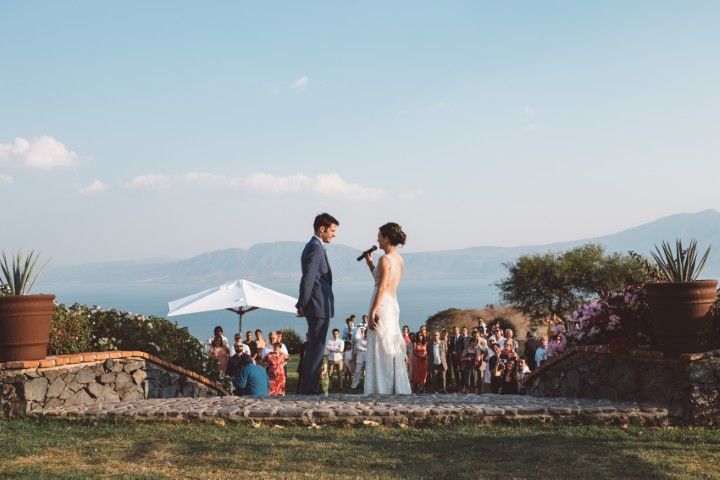
At the ceremony, audio is the priority. Vows and speeches are where the emotional core of a wedding film is built, and that quality cannot be recovered in editing if it was not captured correctly in the moment. We use discreet radio microphones for vow coverage regardless of the acoustic conditions, because outdoor ceremony audio in Marbella is genuinely variable. The sea wind along the coast is a real factor in the warmer months. Open terraces can scatter sound in ways that are difficult to recover. We plan for this rather than adapting once we are already in the space.
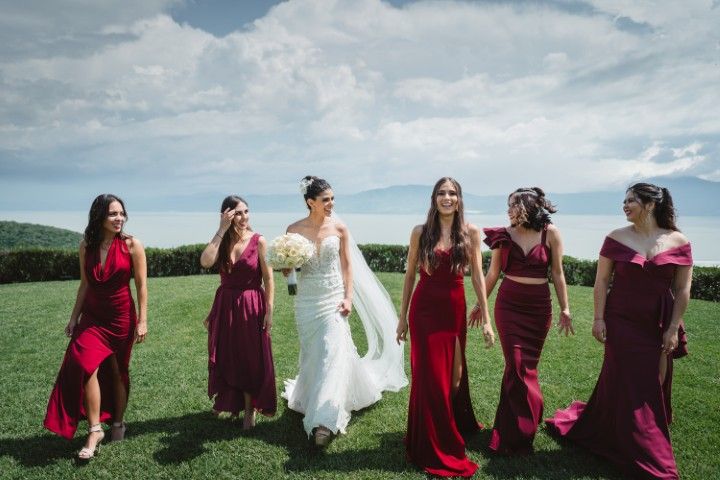
Movement is how film earns its place alongside still photography. Through the ceremony, through the cocktail hour and the transitions between spaces, through the shift from dinner to dancing as the evening deepens - we track the day rather than waiting for moments to arrive. The golden-hour portrait session, which typically falls between five and seven in the evening on Costa del Sol weddings, is where the visual language of the film takes its most complete form: the light, the couple, and the environment in the same frame. We approach this window the same way a photographer does - focused, attentive, unhurried. What we add is motion. How a couple turn toward each other. How late light catches the edge of a dress as two people walk together through a garden. These things belong to film in a way that still photography can only partially suggest.
Reception audio is something we give particular attention to at Marbella weddings. Speeches here are frequently multilingual - a best man who has known the groom since university in one language, a parent who has prepared something carefully in another. We prepare for this range rather than being surprised by it. The variety of voices and languages across a reception speech sequence is one of the things that, in editing, makes a Marbella wedding film feel genuinely specific to the couple and the day.
Filming Across Marbella's Venue Landscape
Marbella's range of wedding settings requires different approaches, and it is worth understanding what changes across them.
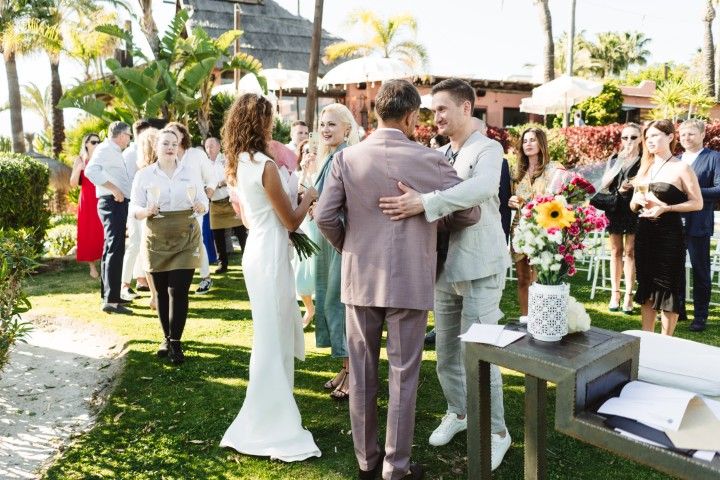
The grand resort venues. Properties like Puente Romano, Marbella Club, and Villa Padierna share a quality that is particularly useful for film: spatial variety within a single estate. Ceremony, cocktail hour, dinner, and dancing each occupy different parts of the property. That movement gives a wedding film the environmental variety it needs to feel like a real document of a full day rather than a sequence of near-identical settings. Coverage at these venues is structured around that movement - treating each transition as an opportunity to establish a new visual environment and then let the action of the day carry through it.
The light at the seafront resorts is also consistently strong in the late afternoon. Puente Romano faces the Mediterranean directly, and as the day progresses the light comes off the water low and warm. We plan portrait sessions at these venues for the late-afternoon window wherever the timeline allows, because the results there are significantly stronger than those produced earlier in the day when the light is flat and the couple are still finding their bearings.
The rural estates. Finca Cortesín and the larger private estates in the hills west of Marbella operate on different terms from the coastal resorts. The spatial depth of a grand Andalusian estate - wide lawns, arcaded walkways, layered countryside stretching behind the ceremony space - gives film a sense of environment that belongs entirely to the place. When late-afternoon light falls from the west across those grounds, the footage has a quality that requires very little in editing. The setting earns it. What film needs to do in those conditions is be present and observant.
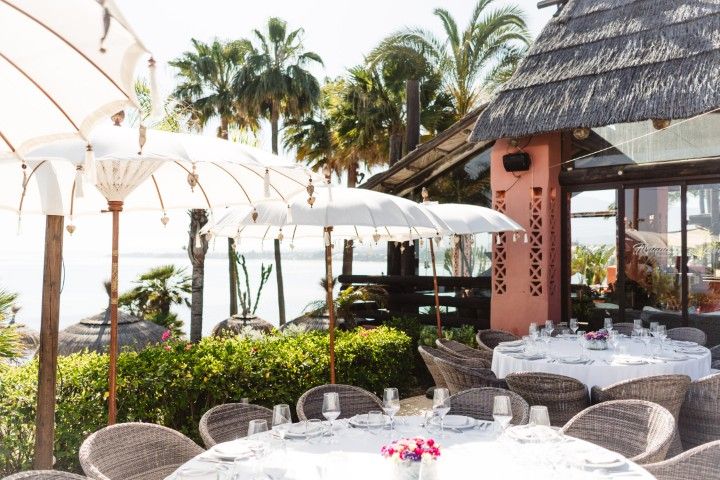
Beach clubs and open coastal settings. Relaxed outdoor beach venues produce a different kind of film: more open, more naturally lit, with a spontaneous atmosphere that formal estate weddings tend not to have. The trade-off is audio. Sea wind is real, open-air ceremonies carry their own acoustic challenges, and an unprepared videographer will lose vow audio at a coastal venue more easily than at a sheltered garden location. When coverage is well prepared for these conditions, the results can be some of the most naturally cinematic footage we produce - open sky, the Mediterranean as part of every frame, the colour of late light on the water behind the couple.
Private villa weddings. Villa weddings are increasingly common in the Marbella area and they present their own distinct conditions. The venue has not been designed for weddings. There are no established ceremony spots, no natural routes through the space. This requires genuine preparation: understanding the specific property in advance, planning how the day will flow through it. When the preparation is thorough, private villa films are some of the most personal work we make. The intimacy of a small group in a private setting comes through film in a way that a resort wedding of a hundred and fifty guests cannot replicate. We talk openly with couples considering villa weddings about what that preparation requires from both sides.
If you are still researching venues, our guide to the best Marbella wedding venues covers the main properties from a photographer and filmmaker's perspective, with honest observations on how each one works across a full wedding day.
What to Look for in a Marbella Wedding Videographer
Choosing a wedding videographer for a Marbella destination wedding is a slightly different decision from choosing one for a local celebration. The logistics are more complex. The stakes feel higher when travel, planning, and a guest list drawn from multiple countries have gone into reaching the day. And the specific conditions of the region - the light behaviour, the venue types, the acoustic challenges of coastal outdoor ceremonies - reward experience in ways that a strong portfolio from elsewhere cannot always represent clearly.
A few things are worth paying particular attention to.
Local experience in Marbella specifically. Knowing how light arrives at Puente Romano in late September, how sea wind affects ceremony audio, when to time the portrait session relative to sunset at a specific property - these come from working in these conditions repeatedly, not from arriving well-equipped and adaptable. Ask whether your videographer has filmed in Marbella specifically, not just somewhere on the Costa del Sol or in Spain more generally.
A genuinely calm presence on the day. The couples who feel most like themselves in a wedding film are the couples who forgot the camera was there. This happens when the filmmaker moves quietly, adapts without drawing attention, and never makes the day feel like a production. It is a quality you can sometimes sense in portfolio footage - does the couple feel natural, or does everything carry a slightly directed quality?
Audio you can actually hear. Watch the ceremony sequence in any portfolio film with care. Are the vows clear and present, or distant, wind-affected, or partially missing? Outdoor ceremony audio is the most technically demanding part of wedding film coverage, and how a filmmaker handles it reveals a great deal about their preparation and approach.
A working relationship with your photographer. A photographer and videographer spend the entire day in the same spaces, sometimes covering the same moments from different angles. They need to share the environment without competing within it. This is one of the most practical reasons some couples choose combined photography and film coverage from a single team rather than coordinating two separate providers for a destination wedding abroad.
Wedding Films in Marbella and Across the Costa del Sol
Marbella sits at the centre of our work along the western Costa del Sol, but our coverage extends across the full region - from Estepona and Casares in the west through to Benalmádena and Nerja to the east, and inland to Ronda, Granada, and Sevilla for couples who want a setting further from the coast. No travel fees apply for Marbella and the surrounding area.
The consistent thread across all of this work is the same approach: calm, documentary, story-first coverage, where the film serves the couple and the day rather than demonstrating technique. What changes between a Marbella resort wedding and an intimate finca celebration outside Málaga is the specific environment - the light, the spatial scale, the atmosphere of the people in the room. Reading those specifics accurately before the day begins is a large part of what makes the difference between coverage that feels universal and coverage that could only have come from this wedding, in this place.
If you are still forming your thinking about whether film is the right choice for your day, our guide on whether wedding videography is worth it addresses that question honestly. For couples navigating the broader planning process from abroad, our destination wedding guide for Spain covers the practical side of organising a celebration here.
You can explore our approach to cinematic wedding films in more depth, including examples of the different film formats we offer and what the process looks like from the first conversation through to final delivery. For couples considering photography alongside film, our Marbella wedding photographer page covers how the two services work together in practice.
Speak to Us About Your Marbella Wedding
If you are planning a wedding in Marbella and are still deciding whether to include film, or you already know you want it and are looking for the right team, we would be glad to hear from you.
Most conversations at this stage are about understanding the day: the venue, the timeline, the kind of celebration you are planning, and what matters most about how you want it remembered. From that, we can give you a clear sense of what coverage would look like, whether we are the right fit, and what the process involves.
If you are wondering how much coverage a Marbella wedding actually needs, how many hours of wedding photography and film you need works through it, and our wedding day timeline guide explains how the Spanish schedule affects where those hours land. For venues specifically, our Marbella venue guide covers the area in depth.
If you are still building your budget, our pricing page gives a clear overview of what film coverage includes and how packages are structured. You can check our availability for your date without any obligation, or get in touch with us directly if you would rather talk first. We are always glad to be involved early in the planning process - asking questions at the shortlisting stage is far better than discovering six months before the wedding that a date has already gone.
Planning a wedding in Málaga?
We are based on the Costa del Sol and photograph and film weddings across Málaga, Marbella, Nerja, and wider Andalusia. Tell us your date and venue - we are happy to help before you have made any decisions.
Frequently Asked Questions
- Do you film weddings in Marbella?
- Yes. Marbella is one of the locations we work in most regularly along the Costa del Sol. We cover the full western Costa del Sol from Estepona and Casares through to the Marbella area with no travel fees. We are familiar with the region's major venues and understand the specific light, logistics, and conditions that make filming here different from other locations.
- What does wedding film coverage in Marbella include?
- Coverage depends on the package, but typically includes the full day from getting-ready through to the evening reception. This means ceremony coverage with radio microphone audio, cocktail hour and transition moments, the golden-hour portrait session, speeches and reception atmosphere, and dinner and dancing. Final delivery includes an edited highlight film and, depending on the package, longer cuts of vows and speeches. We discuss the specific shape of coverage with every couple in advance.
- How far in advance should I book a wedding videographer in Marbella?
- As early as possible, and earlier than most couples expect. Late spring and early autumn dates on the Costa del Sol fill at the same pace as the most sought-after photographer slots. Many couples who leave the videography decision until later in planning find that availability for their specific date has already narrowed. If you are considering film, the most useful thing you can do is have the conversation early, even if you have not yet made a final decision.
- What makes a good wedding videographer for a destination wedding in Marbella?
- Local experience matters more than it might initially seem. Knowing how the light behaves at a specific venue in late September, understanding how sea wind affects outdoor ceremony audio, knowing when to time the portrait session at a beachfront property - these are things that come from working in these conditions repeatedly, not from arriving well-equipped and hoping to adapt. Beyond local knowledge, look for a documentary approach that keeps the couple natural, a focus on audio quality, and a calm presence on the day.
- Do you cover photography and film together for Marbella weddings?
- Yes. Many couples book combined photography and film coverage, and for a destination wedding in particular the convenience of working with a single team is significant - one planning conversation, one aesthetic, two people who already know how to share a space without competing in it. You can find more detail on our Marbella wedding photography page and our films page, or get in touch directly if you would like to discuss how combined coverage works for your specific day.
Planning a wedding in Málaga?
We cover the full Costa del Sol and wider Andalucía. Whether you have already chosen your venue or are still exploring, we would be glad to help - and to capture the day.