
Photography & Videography · 3 August 2026
How Many Hours of Wedding Photography Do You Actually Need?
Six hours, eight hours, or the whole day? It is one of the most common questions couples ask us, and the honest answer has less to do with the number than with which parts of the day the hours actually cover.
It is one of the first questions couples ask, usually somewhere between choosing a venue and comparing packages. Six hours, eight, ten, the whole day. Every photographer structures it differently and none of the numbers mean much on their own.
The honest answer is that the number of hours matters far less than which hours they are. Eight hours placed well covers a wedding completely. Eight hours placed badly misses the two moments you would have paid the most to keep.
Here is how we think about it, based on covering weddings across Málaga and the Costa del Sol rather than on package design.
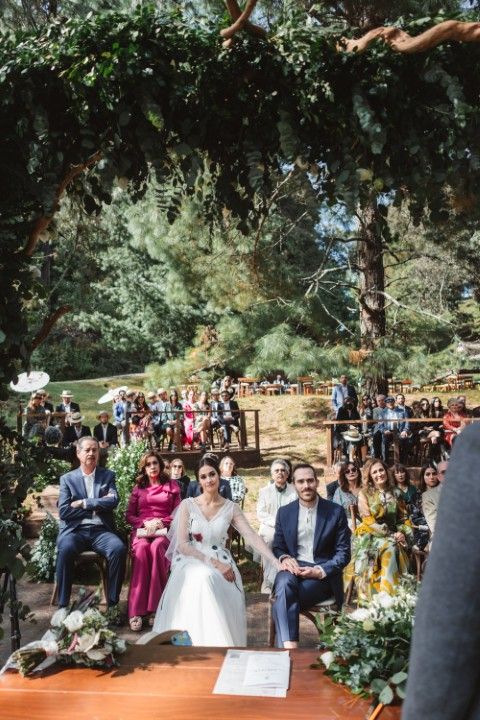
Start From the Moments, Not the Number
Write down the parts of the day you would genuinely regret not having. Most couples, when they do this honestly, produce a list something like:
- The last part of getting ready, when the room is calm and the dress goes on
- Walking down the aisle
- The vows and the ring exchange
- The reaction immediately afterwards, drinks and congratulations
- Family and group photographs
- The two of you in the best light of the day
- Speeches
- The first dance
That list is the brief. The number of hours is simply whatever it takes to hold it together at your venue on your date.
For a typical Costa del Sol wedding with a symbolic ceremony, that list sits comfortably inside eight to ten hours. It is not a coincidence that most packages cluster there.
Where the Hours Actually Go
The reason a wedding day consumes more coverage than couples expect is that the gaps between the highlights are longer than they look on paper.
The ceremony itself is often twenty-five minutes. The congratulations, drinks and group photographs afterwards routinely take ninety. The transition from ceremony space to dining space eats another twenty. Speeches take longer than anyone estimates, always.
Then there is the specifically Spanish factor: the day is stretched at both ends. Ceremonies here run late in summer because of the heat, dinner starts later than couples from northern Europe expect, and the first dance can easily land at half past ten or later. A day that begins with getting ready at two in the afternoon and ends after the first dance at eleven is a nine-hour day before anyone has done anything unusual.
This is why the same "eight hours" behaves very differently in Spain in August than it does elsewhere in April. We go through the mechanics of this in our Costa del Sol wedding day timeline.
Six Hours: When It Works
Six hours is a real option and it suits more weddings than photographers tend to admit.
It works well when the day is compressed and deliberate: a symbolic ceremony, a relaxed reception, a guest list under about sixty, and a couple who are more interested in the celebration than in extensive preparation coverage. It also works well for elopements and small weddings, where the whole day has a different shape and six hours can genuinely cover everything.
Where six hours becomes tight is the summer squeeze. If your ceremony is at seven in the evening because of the heat, and your first dance is at half past ten, six hours starting at four in the afternoon ends before the dancing. You have to choose between getting ready and the evening. Neither choice is wrong, but it should be a decision rather than a discovery.
Eight to Ten Hours: The Normal Answer
This is where most full weddings land, and for good reason.
Ten hours starting ninety minutes before the dress goes on will comfortably reach the first dance for almost any Costa del Sol wedding, including a late summer ceremony. Eight hours does the same for a day with a slightly earlier start or a slightly shorter evening.
The specific advantage of this range is that it holds both ends of the day without needing anything to be cut. You get the quiet preparation material, the whole middle of the day, portraits in the last light, speeches, and the room at its fullest. Nothing has to be traded.
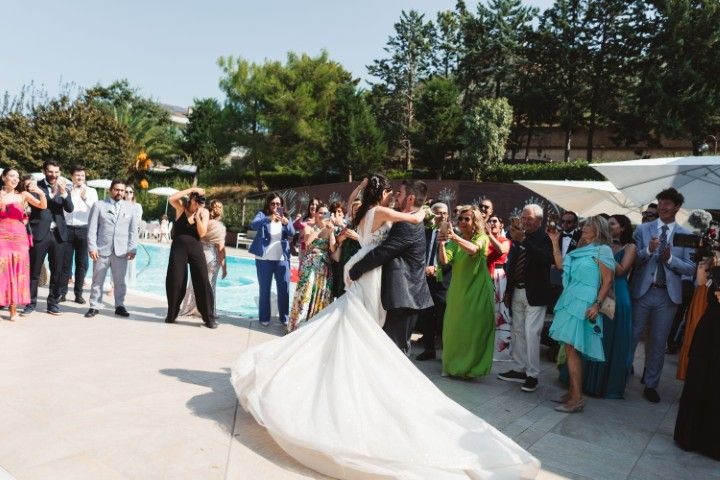
Twelve Hours and Beyond: When There Is a Reason
Longer coverage is worth it when the day itself is genuinely longer, not as a general upgrade.
Real reasons include a religious ceremony, which is longer and often sits in the middle of the day with a substantial gap before the reception. Two venues with a transfer between them. A multi-day celebration with a welcome dinner or a next-day gathering. A very large guest list, where group photographs and greeting people simply take more time. Or a couple who genuinely want the party documented until it ends.
If none of those apply, the extra hours tend to produce more photographs of the same dancing rather than more of the day.
What Gets Lost When the Hours Are Wrong
Two things, almost always.
The golden hour portraits. In the last hour before sunset the light on this coast does something you cannot recreate at any other point in the day. If coverage is scheduled to end before that window, or if the timeline drifts and there is no slack, this is the first thing to disappear. It is also, in our experience, the source of the images couples end up printing and hanging. We treat protecting this window as more important than almost any other scheduling decision.
The first dance and the room at its fullest. The other frequent casualty. A wedding that has been documented up to dinner has a record with no ending. The film in particular suffers here, because a film needs the arc of the day to work as a sequence.
If your coverage has to be shorter than the full day, our advice is consistent: sacrifice the beginning, not the end. Ninety minutes of getting ready is lovely. The last hour of light and the first dance are irreplaceable.
Photography and Film Together
When a couple books both, we run the same hours for both. It is not an upsell; it is the only arrangement that produces two coherent records of the same day.
A film with a shorter window than the photography ends up telling a partial story, and the mismatch is more obvious in a film than in a set of photographs, because film reads as a sequence. If the speeches are outside the film's coverage, the film simply does not have them.
The practical benefit of one team covering both is that the two people already know how to work the same room without competing for position, and you only have one timeline conversation rather than two. Our wedding films page covers how that works alongside the photography.
How We Structure It
We build coverage around your timeline rather than selling blocks and asking you to fit the day inside them. In practice that means we ask what time you expect to be dressed and what time you expect the first dance, and we work out the hours from there.
Our pricing page sets out how the packages are structured and what is included at each level. If your day has an unusual shape, a long gap, two venues, a religious ceremony, we would rather build something that fits it than push you towards the nearest standard option.
If you are earlier in the process and still choosing where to hold the day, our venue guides for Málaga, Marbella and Ronda cover how different venues affect the shape and length of a wedding day, which feeds directly back into this question.
You can check your date or get in touch whenever you like. We are happy to talk through the timeline before you commit to anything, and it is usually the conversation that answers the hours question by itself.
Planning a wedding in Málaga?
We are based on the Costa del Sol and photograph and film weddings across Málaga, Marbella, Nerja, and wider Andalusia. Tell us your date and venue - we are happy to help before you have made any decisions.
Frequently Asked Questions
- How many hours of wedding photography is enough?
- For most weddings, eight to ten hours covers the day properly: the end of getting ready, the ceremony, the celebration afterwards, portraits in good light, speeches and the first dance. Six hours works well for a smaller or more compressed day. Twelve hours is worth it mainly when there is a genuine reason, such as a religious ceremony with a long service, two separate venues, or a celebration that runs deep into the night.
- Is six hours of wedding photography enough?
- It can be, for the right day. Six hours comfortably covers a symbolic ceremony, drinks, group photographs, portraits and the beginning of dinner. Where it becomes tight is if you also want extensive getting-ready coverage at one end and the first dance at the other. In summer on the Costa del Sol the gap between a late ceremony and a late first dance is often the deciding factor.
- Should coverage start with getting ready?
- Usually about ninety minutes before you are due to be dressed, which is enough for the details, the atmosphere in the room and the last part of preparation without paying for two hours of hair being blow-dried. If the getting-ready location is somewhere you love or somewhere your family is gathered, more time is genuinely worth it. If it is an ordinary hotel room, it rarely is.
- When should wedding photography coverage end?
- The first dance is the natural end point for most weddings. It is the last major scheduled moment, and the hour of open dancing that follows tends to produce diminishing returns. If dancing matters a great deal to you, thirty to forty-five minutes past the first dance captures the room at its fullest without extending coverage into the small hours.
- Do photography and film need the same number of hours?
- Broadly yes, and there is a practical reason. A film needs the arc of the day to make sense as a sequence, so a film that stops before the speeches loses something structural rather than just missing a few frames. When we cover both, we run the same hours for both so the two records of the day tell the same story.
Planning a wedding in Málaga?
We cover the full Costa del Sol and wider Andalucía. Whether you have already chosen your venue or are still exploring, we would be glad to help - and to capture the day.